Keypoints
What is known
– Unintentional poisoning is a frequent occurrence in pediatric emergencies, especially in children under five years of age.
– The majority of poisoning events occur at home and involve medications or common household products.
– Early recognition and caregiver disclosure significantly improve diagnosis, treatment, and clinical outcomes.
What is added
– First large-scale study characterizing accidental poisoning in the Portuguese pediatric population.
– The high prevalence of benzodiazepine-related poisonings reflects the issue of Portugal’s broader benzodiazepine use.
– Diagnostic delays due to a failure to disclose poisoning – and their impact on outcomes – are rarely explored in existing literature and are highlighted here for the first time.
Introduction and objectives
Acute poisoning in children is defined as the ingestion, inhalation, injection, or skin absorption of harmful substances within a 24-hour period.1 It represents a significant global public health concern and is the fourth leading cause of Pediatric Emergency Department admissions.2 In 2023, the Portuguese Poison Information Center received 25091 calls related to toxic substance exposures, 34.3% of which involved children, with 61.9% of these cases affecting children under five years of age.3 Accurately determining the true incidence of unintentional poisoning is challenging due to the limited number of studies available worldwide. Additionally, some cases may go undiagnosed not only because of nonspecific symptoms, such as behavioral changes, but also because not all incidents are reported to Poison Information Centers.
Research indicates that over 90% of acute pediatric poisonings are unintentional,4 with most cases occurring during the preschool years, particularly in children under the age of six, with a peak incidence around two to three years of age.4 This high rate is linked to characteristics inherent to early childhood, such as a lack of self-protection and safety awareness,5 natural curiosity,5 a tendency to explore objects with their senses, especially through oral exploration,5 a desire to mimic adults,1 and an attraction to brightly colored household items they perceive as toys.6 Studies further reveal that boys5 are predominantly affected, and that most intoxications occur in the home environment, often under parental supervision, typically involving products that are not safely stored.7,8
Common poisons include medications, household chemicals, outdoor toxins (such as mushrooms, plants, or berries), carbon monoxide, pesticides, alcohol, and illicit drugs (such as cannabis, cocaine, or ecstasy). In Europe, household medications and everyday products are the most common sources.6 A Spanish study published in 2013 reported that, among children under seven years of age, medications (primarily paracetamol, followed by benzodiazepines) were the most frequent agents, with household products ranking second.8 A six-year Italian study published in 2020 found that the leading causes of intoxication among children aged one to five years were household cleaners, followed by analgesics.1 In the United States, 2021 data indicated that the top exposure sources among children aged five or under were cosmetics and personal care products, followed by household cleaning substances, analgesics, dietary supplements, and herbal and homeopathic products. Among substances most frequently involved in pediatric fatalities in children aged five or younger, analgesics ranked highest, followed by fumes, gases and vapors, stimulants and street drugs, cardiovascular drugs and dietary supplements, and herbal and homeopathic products.
Certain types of poison exposures have declined due to preventive measures, including safer packaging (e.g., Destop®), the removal of certain drugs from the market (e.g., dextropropoxyphene), prescription restrictions for infants (e.g., cough suppressants) and children (e.g., Primpéran®, Vogalène®, and codeine), and updated recommendations (e.g., fever management using non-steroidal anti-inflammatory drugs). However, new forms of poisoning have emerged with the introduction and widespread prescription of other substances (e.g., tramadol, triptans, and methylphenidate) or new household and consumer products, such as laundry detergent capsules, e-cigarette refill liquid, and synthetic cannabis.4
Most cases of poisoning exposure in young children result in only mild symptoms, and fatalities are relatively rare.9 Clinical presentation varies significantly depending on the ingested substance, ranging from asymptomatic to critically ill.10 When symptoms do occur, neurological and gastrointestinal symptoms are most common.
Depending on the substance and quantity ingested, decontamination (gastric lavage or the administration of activated charcoal) or antidotes may be needed. Supportive care should focus on ensuring the maintenance of the airway, breathing, and circulation, while also addressing any hypoglycemia.11
The aim of this study was to characterize the pediatric patients admitted for unintentional poisoning in the Emergency Department.
Methods
We conducted a retrospective observational study with a descriptive design of pediatric patients diagnosed with unintentional poisoning at the Emergency Department of a level II hospital in the Lisbon Metropolitan Area in Portugal. The study period spanned from 2015 to 2022.
Inclusion criteria encompassed infants and children under 18 years of age diagnosed with accidental poisoning. Cases involving intentional poisoning, those lacking a confirmed diagnosis, and patients aged 18 years or older were excluded. Electronic medical records were reviewed to collect relevant clinical and demographic data.
Statistical analyses were performed using IBM SPSS® Statistics software, including descriptive statistics. Data was presented in tables and graphs to illustrate key findings. This study was approved by the hospital’s Ethics Committee.
Results
A total of 148 patients with a median age of two years (IQR: 2) were included, of whom 52.7% were male and 89.2% of whom were five years of age or under. Among them, 10.8% had a pre-existing medical condition requiring specific medication at home, 6.8% had psychomotor developmental disorders, 3.4% were diagnosed with attention deficit hyperactivity disorder (ADHD), and 3.4% had other psychiatric disorders. No consistent seasonal variation was observed in the monthly distribution of cases (Fig. 1). However, there was a noticeable peak in January and August (Fig. 2). Despite yearly fluctuations, the annual distribution did not show a significant increase over time (Fig. 3).
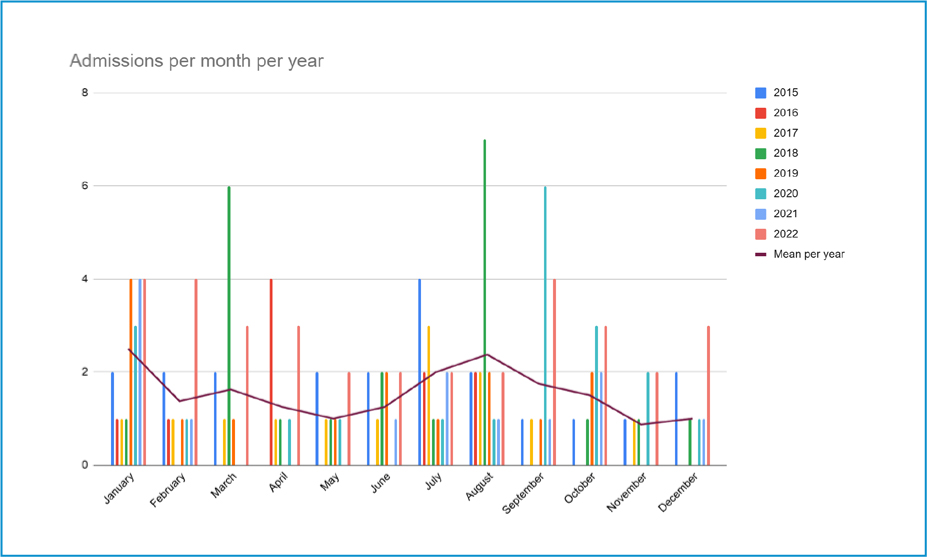
Figure 1. Monthly distribution of admissions per year (2015-2022).
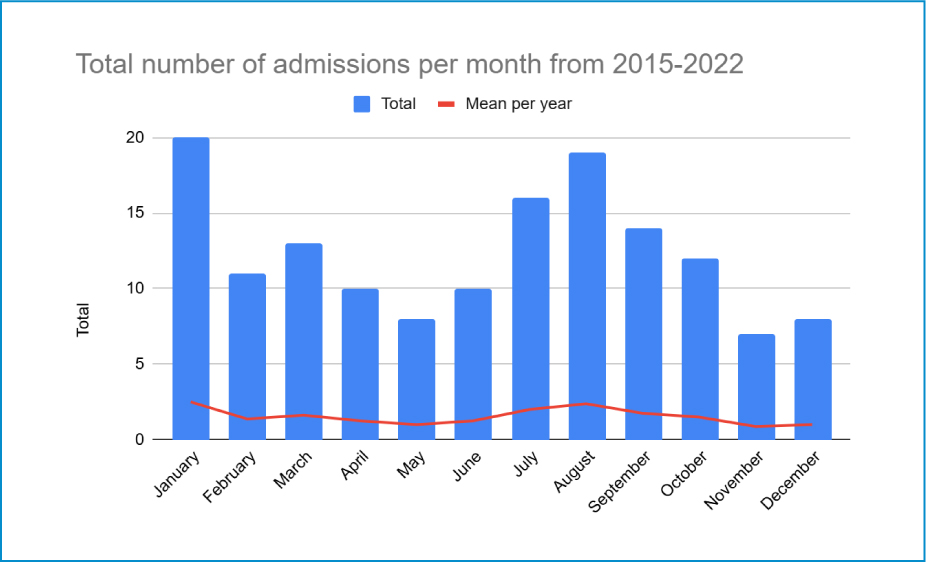
Figure 2. Monthly distribution of admissions (2015-2022).
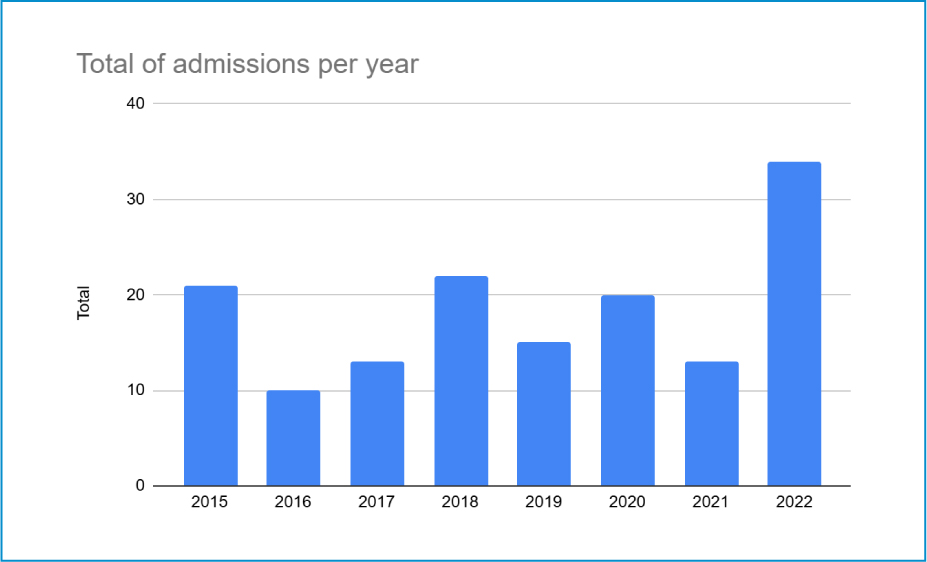
Figure 3. Annual distribution of admissions (2015-2022).
In 92.6% of cases, the suspicion of poisoning was considered upon admission, with caregivers immediately disclosing the incident in 81.5% of cases. In 12.2% of cases, the diagnosis was suspected due to inconsistencies in clinical history or because the child’s symptoms were highly suggestive of poisoning. Comparing the subgroup of children that were admitted to the intensive care unit (n = 10) and the ones that were not (n = 138), it was statistically significant that when the caretakers did not reveal the intoxication upon admission, children had a more serious clinical presentation (p-value of < 0.05; Chi-square test).
The majority of patients (67.6%) were monitored in the short-stay inpatient unit for 12-24 hours, while 6.8% required admission to the intensive care unit, and no deaths were registered. Notably, 40.5% of patients remained asymptomatic and showed no abnormalities upon physical examination.
Regarding clinical management, 62.8% of cases required only clinical monitoring, while 4.1% received an antidote, 30.4% underwent gastric lavage, and 25.0% were treated with activated charcoal. No patients experienced long-term sequelae. Among the 38.5% who underwent toxicological screening of biological samples, only 50.9% returned positive results.
As for the toxic agents, three major groups were identified: pharmaceuticals, drugs of abuse, and household products. The full list of toxic agents can be found in table 2. Of these, 18.8% involved medication prescribed for the child’s own condition, while 44.6% involved medication prescribed for a caregiver’s illness. Notably, in 17 cases (11.5%), poisoning resulted from multiple toxic substances, including those from different subgroups. In eight cases (5.4%), the poisoning resulted from a dosing error of a medication prescribed by a doctor, with half of these cases specifically involving risperidone.
Table 1. Absolute and relative frequency of symptoms
| Symptoms | N | % |
|---|---|---|
| Neurological | ||
| Drowsiness | 50 | 33.8% |
| Agitation | 24 | 16.2% |
| Confusion | 8 | 5.4% |
| Gait disturbance | 14 | 9.5% |
| Dystonia | 7 | 4.7% |
| Hypertonia | 5 | 3.4% |
| Ataxia | 11 | 7.4% |
| Seizure | 3 | 2.0% |
| Hallucinations | 2 | 1.4% |
| Pupillary changes | 7 | 4.7% |
| Gastrointestinal | ||
| Vomiting | 20 | 13.5% |
| Diarrhea | 1 | 0.7% |
| Systemic | ||
| Hemodynamic repercussion | 3 | 2.0% |
Table 2. List of toxic agents involved in intoxications
| Variable | Subgroup | N | % |
|---|---|---|---|
| Medication | 105 | 68.2 | |
| Benzodiazepines | 21 | 13.6 | |
| Antipsychotics | 16 | 10.4 | |
| Antidepressants | 10 | 6.5 | |
| Anti-allergy drugs | 10 | 6.5 | |
| Analgesics | 10 | 6.5 | |
| Antiseizure drugs | 6 | 3.9 | |
| Oral contraceptives | 4 | 2.6 | |
| Beta-blockers and calcium channel blockers | 5 | 3.2 | |
| Miscellaneous/Others | 23 | 14.9 | |
| Drugs and alcohol | 8 | 5.2 | |
| Cannabinoids | 6 | 3.9 | |
| Cocaine | 1 | 0.6 | |
| Alcohol | 1 | 0.6 | |
| Household products | 38 | 24.7 | |
| Detergents | 7 | 4.5 | |
| Oils | 3 | 1.9 | |
| Miscellaneous/Others | 28 | 18.2 | |
| Miscellaneous/Others | 3 | 1.9 | |
| Total | 154 | 100 | |
Following the incident, social factors were recognized in 22 cases (14.9%), leading to referrals to child and youth protection services.
Conclusion
Comparison with case series published in the literature reveals that the epidemiology observed in this study aligns with previously reported findings. Identified risk factors include being under five years of age, male,3 and having neurological or psychomotor developmental disorders,12 though the vast majority of cases occur independently of these conditions. This association may be explained by behavioral differences in these children, as well as the increased likelihood of having easily accessible medications at home, particularly antipsychotics.13
The vast majority of cases occur at home, reinforcing the importance of implementing safety measures for the storage of toxic products and promoting parental literacy aimed at preventing accidents.14 One noteworthy aspect is the notable increase in the number of cases in August and January, corresponding to school holiday periods, when children spend more time at home.
One notable finding in this study is that poisoning was suspected on the basis of clinical presentation in 12.2% of cases, either due to an incongruent history or the presence of symptoms indicative of poisoning. This aspect is rarely addressed in the literature and provides valuable insight from a clinical perspective. From this, one can infer the importance of a high level of clinical suspicion, since ingestion may not be witnessed, or there may be a social or familial risk factor. These are usually cases of mild to moderate severity; however, in cases that evolve with severity, the outcome can be fatal. In the event of suspected poisoning, biological samples should be collected ad initium (blood, urine, or vomit) due to the half-life of the toxic substances and in order to increase the chance of diagnostic confirmation. It is worth highlighting the low diagnostic yield of tests used in hospital laboratories and the fact that only a limited panel of substances is tested, reducing the chances of identifying the toxic substance.15,16 Therefore, in the case of strong suspicion and a severe clinical situation, it is crucial to freeze the biological samples collected upon admission to send them to specialized laboratories for post-hoc toxicological identification, in order not to lose the timing for their identification. This approach could contribute to a better understanding of the clinical effects of certain toxins, in addition to often enabling the establishment of a confirmatory diagnosis and implementing protective measures for the child, when applicable.17
Regarding the toxic substances, it is also interesting that in this population, there seems to be a predominance of poisoning by medications available at home, followed by household products, which aligns with what is described in various case series. What differs from the rest of the literature is the emphasis on benzodiazepines, a class of drugs widely used in the Portuguese population, especially among adults and the elderly, reflecting the true benzodiazepine epidemic experienced in the country.18 In addition to the problem of insecure storage of these products, the question arises as to whether the packaging of these medications is safe for children and appropriate for environments where children live: they may be too appealing, with easy-to-open containers or blister packs that are easy to open.19
Overdosing errors also warrant attention, as they are easily preventable through proper parental education and clear guidance during medical consultations. Proactive strategies in these areas can significantly reduce the risk of such incidents.20 Some medications may have complex dosing instructions, particularly for families with lower literacy levels, as they often include measurement devices that make accurate dosing challenging (e.g., syringes with capacities far exceeding typical prescribed doses). This highlights the need for pharmaceutical companies to continue implementing safety measures, including mechanisms for reporting these issues so they can be addressed in product design. The same concern applies to household products, especially detergents, which are frequently packaged in bright, attractive designs that may unintentionally appeal to children.21
In most cases, no social risk factors were identified, reinforcing the idea that this is a clinical situation that could occur in any family setting, even with a protective and careful family. However, repeated poisonings, inconsistencies in reported facts, or severe intoxications identified during unrelated admissions should raise concerns about possible maltreatment.22
Limited epidemiological studies on unintentional poisoning in children have been published,5 particularly in Portugal, highlighting the need for further research to address this gap in the literature. It is especially important to invest in parental literacy and accident prevention by implementing basic child safety measures, ensuring a protective and safe environment. It is also important to raise awareness among parents and healthcare professionals about the need to lower the threshold for suspecting accidental poisoning: any unexplained changes in vital signs, alterations in mental status, or electrolyte disturbances should prompt the suspicion of poisoning.22 Furthermore, preventive strategies should include proper labeling and storage of medications, the use of child-safe packaging, and ongoing supervision of children. Reducing the pack sizes of over-the-counter medications could also be a valuable safety measure to help prevent accidental overdoses.23,24
Pediatric poisonings are a frequent cause of Emergency Department visits. While most cases are mild, some can result in severe or even fatal outcomes and may be challenging to diagnose in the absence of a suggestive clinical history. Maintaining a high index of clinical suspicion is essential for early intervention. Further studies are needed to improve our understanding of these cases and enhance clinical knowledge in this area.
Author contributions
All the authors contributed to the design of the study. C. Ferreira Nunes and F. Paixão contributed to data collection, and all the authors contributed to the writing of the article and the review.
Funding
None.
Conflicts of interest
None.
Ethical considerations
Protection of humans and animals. The authors declare that no experiments involving humans or animals were conducted for this research.
Confidentiality, informed consent, and ethical approval. The study does not involve patient personal data nor require ethical approval. The SAGER guidelines do not apply.
Declaration on the use of artificial intelligence. The authors declare that no generative artificial intelligence was used in the writing of this manuscript.
