
Keypoints
What is known
– CHD is the most common congenital anomaly; about 25% of cases are critical.
– In 2011, the AAP and AHA endorsed pulse oximetry screening for CCHD.
– In Portugal, universal CCHD screening has been recommended, but no national protocol exists.
What is added
– From April 2017 to December 2022, screening of 11,094 newborns identified no CCHD.
– Among 56 evaluated positive screens, PPV was 0% for CCHD and 10.7% for non-critical CHD.
Introduction
Congenital heart disease (CHD) is the most prevalent birth anomaly, affecting about 8-10 per 1,000 live births. Almost 25% are classified as critical congenital heart disease (CCHD), which requires surgical or percutaneous intervention within the first year of life. CCHD contributes to 40% of infant deaths from congenital anomalies. Advances in prenatal diagnosis and neonatal care have improved outcomes, and early detection plays a critical role in survival and treatment success.1–4
Neonatal screening using pulse oximetry (POx) has been widely endorsed as a means to improve early detection and outcomes for CCHD. Tertiary hospitals play a key role in implementing such screenings due to their focus on high-risk newborns.5
Since 2011, the American Academy of Pediatrics (AAP) and the American Heart Association (AHA) have recommended POx screening after 24 hours of life or prior to discharge. This recommendation was subsequently incorporated into the Recommended Uniform Screening Panel (RUSP) guidelines in the United States and then adopted into national screening guidelines in the United States and several European countries.6,7
What we know about POx
Pulse oximetry (POx) is widely regarded as an accessible, non-invasive, painless, cost-effective method for screening for critical congenital heart disease (CCHD), as most CCHD cases involve some degree of hypoxemia.
How: POx measures peripheral oxygen saturation by emitting light through the skin and analyzing the light absorption differences between oxygenated and deoxygenated hemoglobin.6
Goals: The American Academy of Pediatrics (AAP) and the American Heart Association (AHA) identified 13 common congenital heart defects as primary targets for CCHD screening, focusing on conditions that often lead to neonatal hypoxemia (see Table 1).8 POx alone has a pooled sensitivity of 76.3% and specificity of 99.9% for detecting CCHD 2, and detection rises to about 90% when combined with antenatal ultrasound and physical examination.4
Table 1. Primary and secondary targets of the CHD screenings defined by the AAP and the AHA in 2009
| Primary targets |
| Hypoplastic left heart syndrome Pulmonary atresia Total anomalous pulmonary venous drainage d-Transposition of the great arteries Tricuspid atresia Truncus arteriosus Tetralogy of Fallot |
| Secondary targets |
| Coarctation of the aorta Double-outlet right ventricle Ebstein anomaly Interrupted aortic arch Single ventricle Other non-specified cyanotic lesions |
False negatives: Certain CCHDs, such as coarctation of the aorta, may be missed by POx, particularly conditions with no initial hypoxemia. Non-CCHD cases that lack hypoxemia may also go undetected.3
False positives: false-positive results often stem from non-cardiac conditions such as sepsis, pneumonia, or hemoglobinopathies. However, these conditions may still benefit from early detection and timely medical intervention.9
A complementary tool, the peripheral perfusion index (PPI), may enhance the detection of certain CCHDs, especially those involving obstructed blood flow from the heart that POx may miss. The PPI assesses peripheral blood flow and has shown potential in detecting cases such as coarctation of the aorta. Combining both POx and PPI may improve overall screening effectiveness, especially for conditions that are not always accompanied by low oxygen saturation.10–12
In Portugal, a 2013 publication from the Centro Hospitalar e Universitário de Coimbra was the first to propose the incorporation of CCHD screening into Portuguese maternity units, advocating for its widespread implementation.13 However, Portugal currently lacks a standardized national protocol for CCHD screening, resulting in varied practices across healthcare centers.
The impact of CCHD screening on infant mortality remains debated, with some studies suggesting a mortality reduction of up to 33%, while others report a minimal effect on CCHD-related mortality.14,15 In Portugal, research on the effectiveness of CCHD screening is scarce, underscoring the importance of studies to assess the feasibility and outcomes of POx screening for early identification and management of newborns with CCHD.
This study aimed to assess the feasibility and outcomes of a neonatal CCHD screening program performed at discharge in a tertiary hospital.
Methods
A retrospective observational study was conducted at Hospital Santa Maria, ULSSM, a tertiary care hospital in Lisbon, Portugal. The study evaluated the implementation and outcomes of a neonatal screening program for Critical Congenital Heart Disease (CCHD) using pulse oximetry (POx) and peripheral perfusion index (PPI). Routine screening was temporarily suspended in 2020 during the COVID-19 pandemic.
A consecutive sample of newborns admitted to the postnatal ward was included. Eligible participants were asymptomatic term and late preterm infants (≥ 34 weeks of gestation). Newborns were excluded if they were symptomatic, had a prenatal diagnosis of congenital heart disease, or were directly admitted to the Neonatal Intensive Care Unit (NICU), as they did not undergo routine screening.
Screening was performed by the nursing team using the Masimo® oximeter (model FKF-RDS7A, Irvine, USA). Measurements were taken at 48 hours of life or prior to discharge, with some screenings occurring up to 72-96 hours postnatally. The POx measured oxygen saturation (SpO2) on the right hand (pre-ductal) and one foot (post-ductal). Simultaneously, PPI values were recorded at both sites.
The screening protocol followed a stepwise approach: immediate failure if SpO2 < 90% or PPI < 0.5 in either limb; repeat failure if SpO2 between 90 and 94%, or pre- and post-ductal difference ≥ 3%, or PPI < 0.7 after up to two additional measurements spaced one hour apart. Newborns with a positive screening result were referred to Pediatric Cardiology for further evaluation, including echocardiography. The full hospital screening protocol is outlined in figure 1.
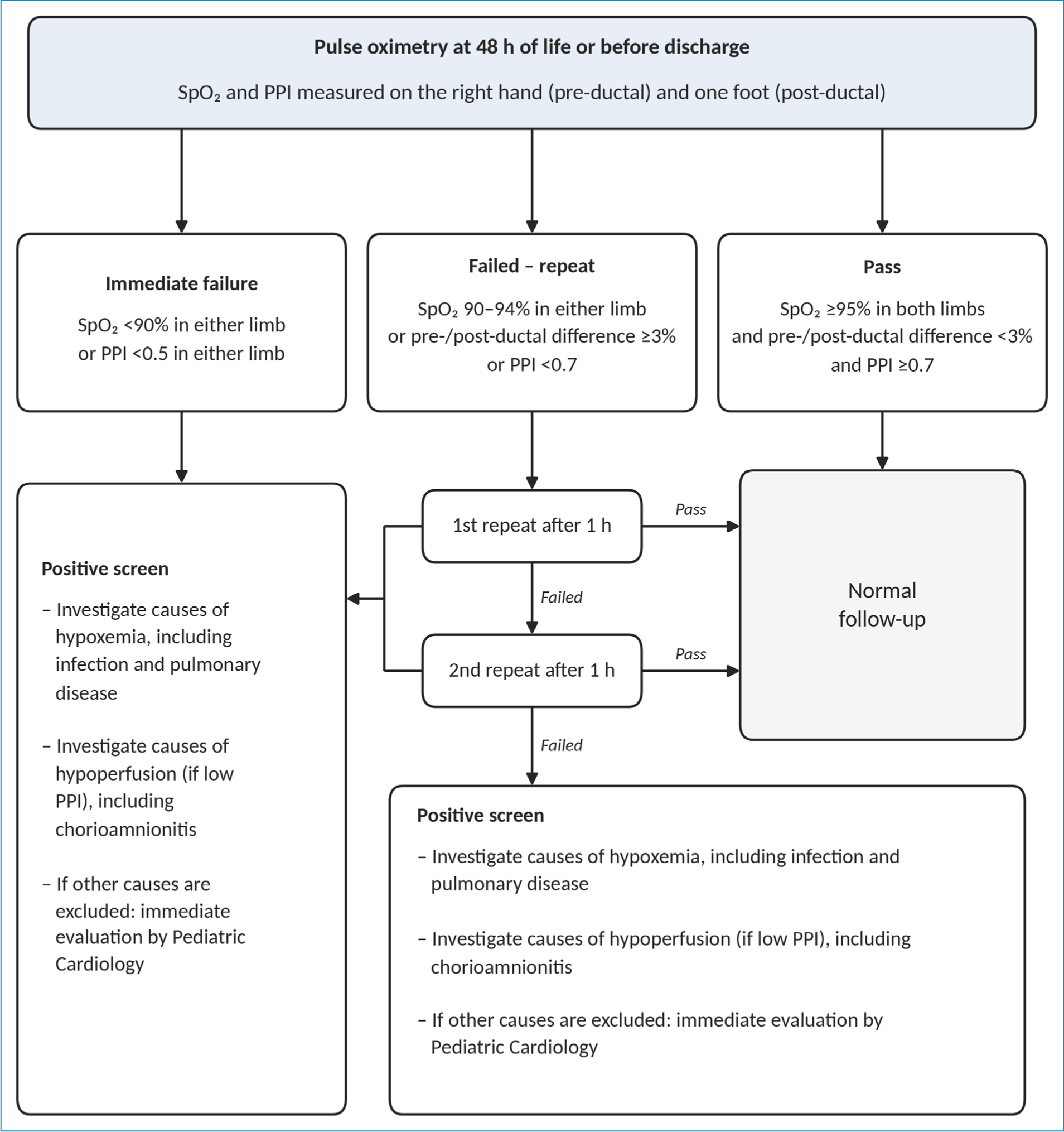
Figure 1. Algorithm for neonatal screening of critical congenital heart disease implemented at Hospital Santa Maria since 2017. A PPI > 4.5 may result from vasodilatation (e.g., related to crying), justifying repetition of the measurement. PPI: peripheral perfusion index; SpO2: peripheral oxygen saturation.
Collected data included: sample characteristics (date of birth, sex, gestational age, and birth weight), screening data (date and result of POx screening, need for retesting, and number of repetitions), and clinical outcomes (referral to Pediatric Cardiology, transfer to other services, and neonatal mortality).
All data were analyzed using Microsoft Excel®. Continuous variables (e.g., gestational age and birth weight) were expressed as means, while categorical variables (e.g., screening outcome and referral status) were presented as frequencies and percentages.
Results
Data on CCHD screening
During the study period, a total of 11,800 newborns were admitted to the postnatal ward at Hospital Santa Maria, with 94% (n = 11,094) undergoing CCHD screening using pulse oximetry and the peripheral perfusion index. Annual screening numbers ranged from 1,068 to 2,223. Lower numbers were observed in 2017, which included only April-December, and in 2020, when routine screening was temporarily suspended during the COVID-19 pandemic (Fig. 2).
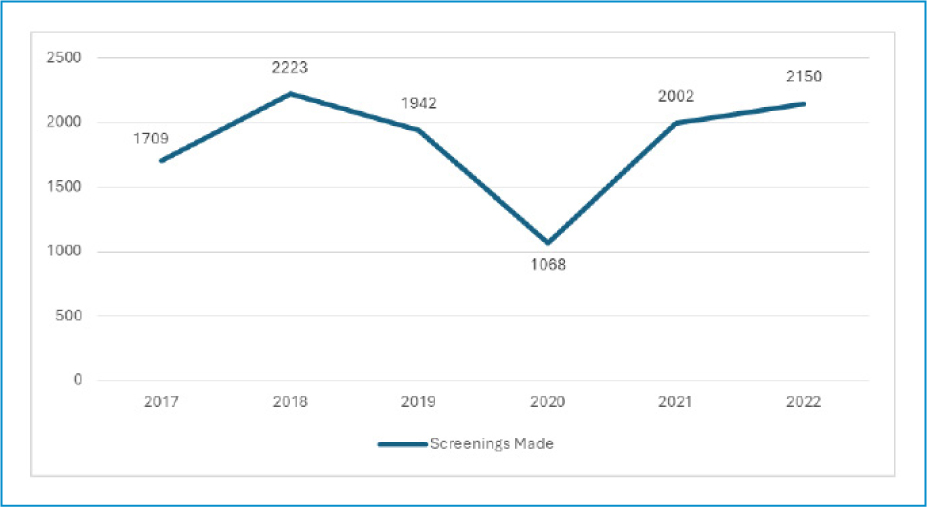
Figure 2. Number of CCHD screenings carried out between 2017 and 2022.
Among the 11,094 newborns screened, 530 (4.8%) failed the initial screening performed at 48 hours of life or immediately prior to discharge, occasionally up to 72 – 96 hours postnatally. Of these, 396 newborns (74.7%) underwent at least one repeat screening: 345 (64.1%) were retested once, and 51 (9.6%) twice. A total of 60 newborns (0.54% of those screened) had a positive screen and were referred to Pediatric Cardiology: 25 (4.7% of abnormal initial screens) after the initial screening and 35 (6.6%) after abnormal repeat testing.
A subset of neonates with abnormal initial screening outcomes did not undergo repeat evaluation. Early in the protocol’s adoption, several misinterpretations were noted, often linked to PPI values < 0.7 and oxygen saturations at the borderline threshold of 94%. Moreover, an elevated PPI and reversed saturation differentials – where post-ductal values exceeded pre-ductal by ≥ 3% – were inaccurately labeled as pathological.
The most common abnormal findings on POx screening included a pre- and post-ductal oxygen saturation difference ≥ 3% (n = 322; reversed in approximately three-quarters of cases), SpO2 values < 95% (n = 143), and PPI values < 0.7 (n = 110). Of the 60 referrals to Pediatric Cardiology, only five met the criteria for immediate failure, defined as oxygen saturation < 90% or PPI < 0.5. The remaining 20 infants referred after the initial screening were referred on the basis of a single abnormal reading, a deviation from the protocol. Figure 3 presents a summary diagram of these screening outcomes.
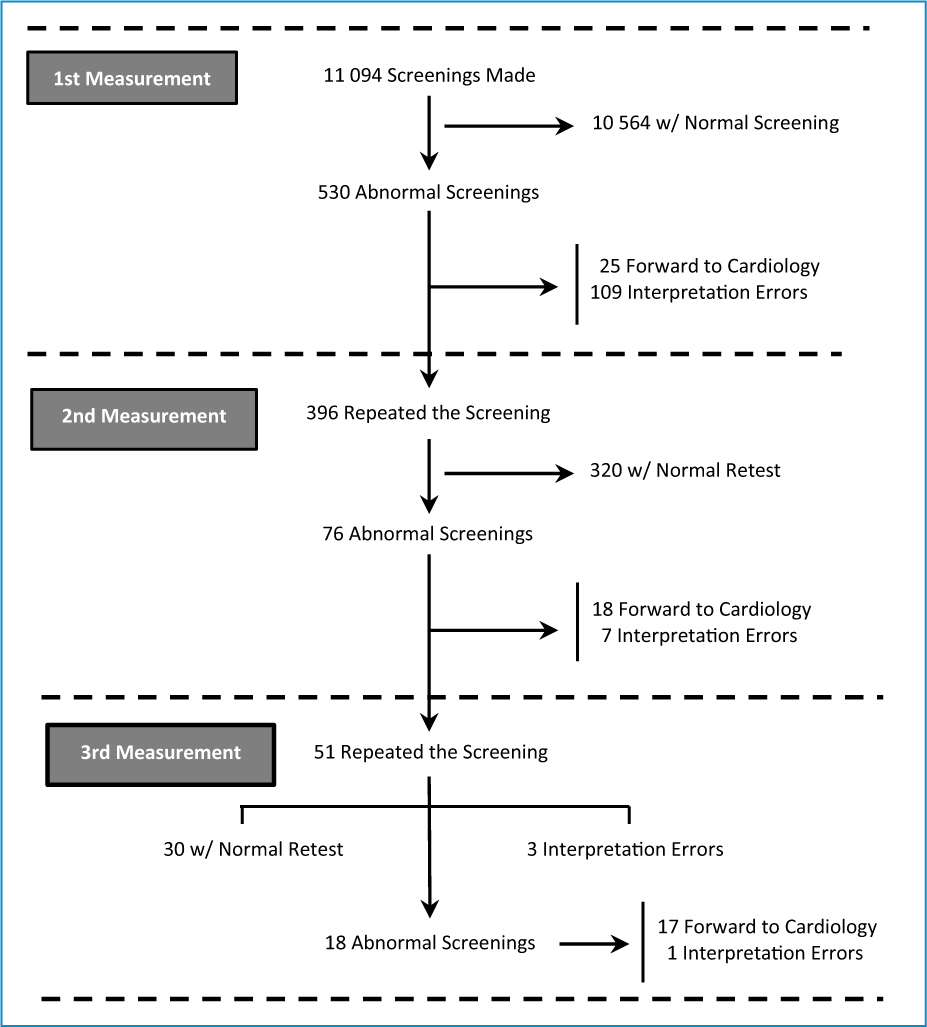
Figure 3. Flow of newborns through the screening measurements, April 2017-December 2022.
Positive screenings
Out of the 60 newborns who screened positive, either due to an initial screening failure or positive retesting, clinical records were accessible for 56 infants, all of whom underwent echocardiography. The remaining four had no outcome data: two could not be identified in the manual screening records, and two had a prenatal diagnosis of CHD and should have been excluded from screening per protocol. These four are reported separately and are not classified as free of heart disease.
Of the 56 infants submited to echocardiography, 52% were female and 48% male. The mean birth weight was 3,186 grams (SD ± 608 g) and the mean gestational age was 39 weeks (SD ± 1.5 weeks).
No cases of critical congenital heart disease were diagnosed. However, 18 infants presented with findings on cardiac ultrasound: six had non-critical congenital heart defects and 12 had transitional or minor findings without structural CHD (Fig. 4). The remaining 38 infants had a normal echocardiogram. According to follow-up data, both cases of stenosis of the aortic arch remained stable with no echocardiographic progression observed. The referral reasons included pre-ductal saturation below 93% and a 3% differential between pre- and post-ductal saturations. Two additional cases of transient respiratory distress were recorded, one of which required short-term hospitalization in the NICU with supplemental oxygen.
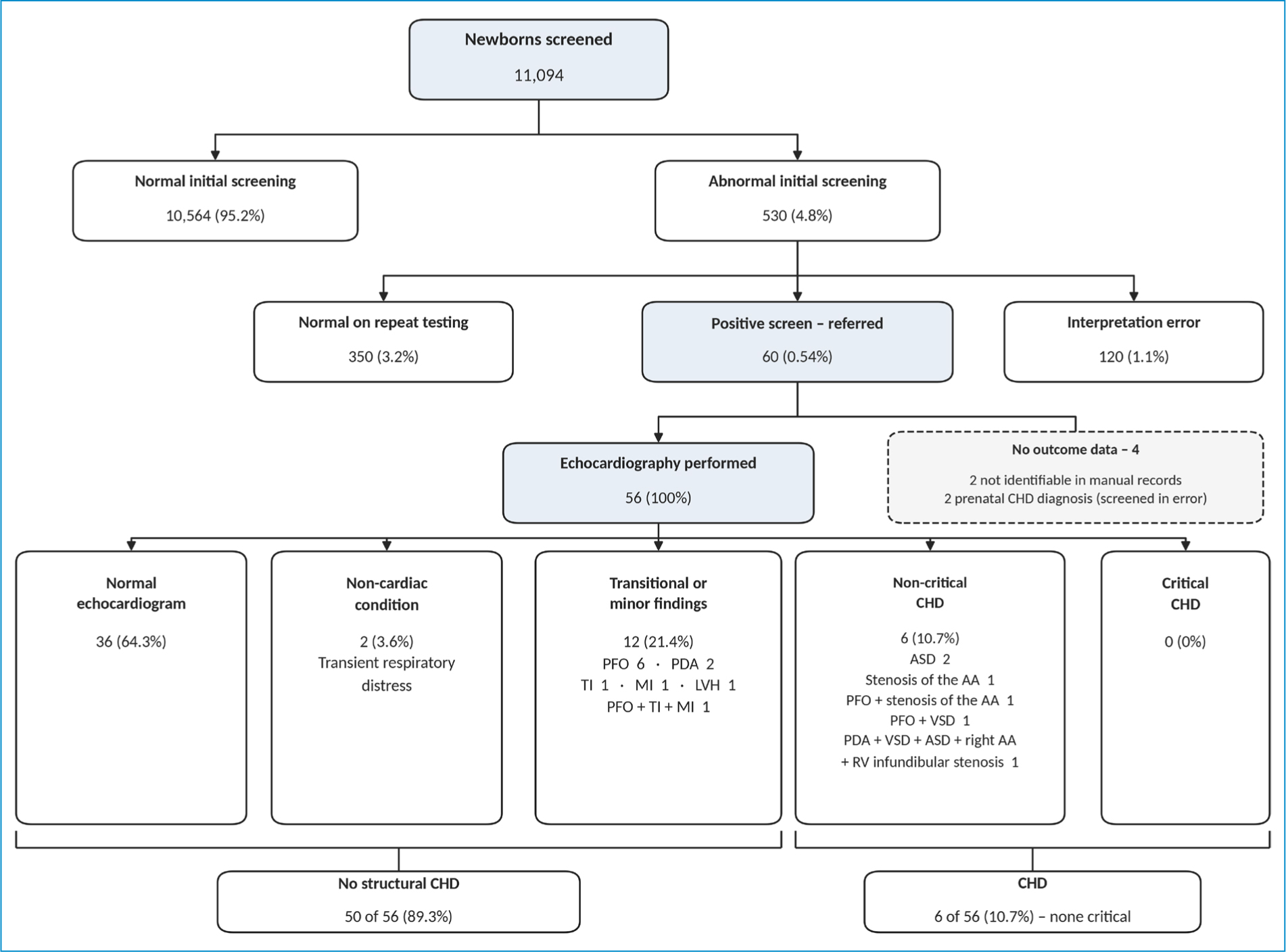
Figure 4. Outcomes of neonatal CCHD screening at Hospital Santa Maria, April 2017–December 2022. Percentages in the upper levels refer to all screened newborns (n = 11,094); outcome percentages refer to infants with a positive screen and available echocardiographic data (n = 56). AA: aortic arch; ASD: atrial septal defect; CHD: congenital heart disease; LVH: left ventricular hypertrophy; MI: mitral insufficiency; PDA: patent ductus arteriosus; PFO: patent foramen ovale; RV: right ventricle; TI: tricuspid insufficiency; VSD: ventricular septal defect.
In total, no cases of CCHD were diagnosed. The positive-screen rate was 0.54% (60/11,094) and, among the 56 infants with available outcome data, the positive predictive value was 0% for CCHD, 10.7% for non-critical CHD, and 3.6% for non-cardiac conditions. As infants with a negative screen were not followed after discharge, a formal false-positive rate could not be calculated.
Discussion
This study assessed the implementation and outcomes of a five-year neonatal screening program for critical congenital heart disease (CCHD) using pulse oximetry (POx) at discharge in a tertiary care hospital setting. Despite a high screening adherence rate of 94%, no cases of CCHD were detected, raising questions about the added value of POx screening in environments where prenatal diagnosis is frequently available and comprehensive.
The absence of CCHD diagnoses aligns with previous findings in similar tertiary settings, such as those reported by Schena et al.11 However, the inability to verify the prenatal care status of each newborn in our sample limits our capacity to evaluate the extent of overlap between prenatal and postnatal detection. This limitation is particularly relevant in assessing the incremental value of postnatal POx screening in high-resource hospitals.
While no CCHD cases were found, the screening program identified six cases of non-critical CHD and two non-cardiac conditions. In the absence of critical defects, the most frequent finding was patent foramen ovale and atrial septal defect (Fig. 4), in agreement with Portuguese national data.16,17 These findings, while not immediately life-threatening, suggest that POx screening may confer secondary benefits through the early detection of clinically relevant conditions. However, in tertiary care environments, with well-established prenatal screening, the cost-effectiveness and clinical utility of universal POx screening warrant critical evaluation.
The The observed false-positive rate of 0.5% was higher” with “The observed positive-screen rate of 0.54% was higher than that reported in U.S. studies (approximately 0.05%) but like rates in the United Kingdom, where earlier screening (at 24 hours) has been associated with increased false positives.1–3,18 Since our screenings were performed after 48 hours of life, early transitional circulation is an unlikely explanation. Instead, the elevated false-positive rate may be attributed to protocol deviations, such as referring newborns based on a single abnormal reading, and the relatively easy access to echocardiography during weekdays, which may have lowered the threshold for referral. These findings highlight the importance of strict protocol adherence and ongoing staff training to minimize unnecessary interventions and maintain screening accuracy.
The inclusion of the peripheral perfusion index (PPI) as an adjunct to POx was a key methodological component of this study. PPI has been suggested to aid in detecting cardiac anomalies not typically associated with hypoxemia, such as left ventricular outflow tract obstructions.10,11 However, in our sample, two cases of aortic arch stenosis presented with normal PPI values. Moreover, PPI was frequently misinterpreted, contributing to inconsistent decisions regarding repeat testing and referrals. These results underscore the need for international consensus on validated PPI thresholds and further research to determine its value when used alongside POx.
Several limitations should be considered. First, we lacked complete data on prenatal follow-up, which likely impacted our ability to detect new CCHD cases. Additionally, high-risk neonates, such as those admitted to the NICU, were excluded from screening, potentially leading to missed diagnoses. Variability in staff experience and deviations from the screening protocol may also have influenced the outcomes. Finally, incomplete post-discharge follow-up raises the possibility of undetected false negatives.
In conclusion, while POx screening remains a widely endorsed, cost-effective tool for CCHD detection,19–21 its diagnostic yield in tertiary care settings with high prenatal detection rates may be limited. POx may offer more benefit in lower-level healthcare facilities with restricted access to prenatal screening.22–23 The addition of tools such as PPI holds promise, but requires further validation. Future efforts should focus on national-level evaluations of cost-effectiveness, the refinement of protocols, and the incorporation of adjunctive methods to optimize neonatal cardiac screening programs.
Conclusion
This study demonstrates the feasibility of incorporating pulse oximetry-based screening for critical congenital heart disease (CCHD) into routine clinical workflows within a tertiary care setting. Despite high screening adherence, the absence of confirmed CCHD cases and a relatively high positive-screen rate underscore the need to critically reassess the effectiveness of such programs in high-resource environments with established prenatal diagnostic systems.
Future research is warranted to evaluate the clinical usefulness, cost-benefit ratio, and optimal strategies for implementing CCHD screening across different healthcare settings, particularly where prenatal detection is limited or unavailable.
Author contributions
M. Ruivo: bibliographic search, study design, data collection, analysis and interpretation of results, and drafting of the article; F. Carmo: data collection, analysis and interpretation of results, and drafting of the article; C. Ferreira Gonçalves: data collection, analysis and interpretation of results, and drafting of the article; A. Andrade: data collection, and analysis and interpretation of results; M. Ferreira: data collection; M. Rebelo: critical reviewing of the content of the article; A. M. Graça: critical reviewing of the content of the article; A. Berenguer: drafting of the article and critical reviewing of the content of the article.
Funding
None.
Conflicts of interest
None.
Ethical considerations
Protection of human subjects and animals. The authors declare that no experiments on humans or animals were performed for this research.
Confidentiality, informed consent, and ethical approval. The authors have obtained approval from the Ethics Committee for the analysis of routinely collected and anonymized clinical data; therefore, individual informed consent was not required. Relevant ethical recommendations have been followed.
Declaration on the use of artificial intelligence. The authors declare that no generative artificial intelligence was used in the writing or creation of the content of this manuscript.
