

Keypoints
What is known
– Parental satisfaction is a key indicator of quality of care in pediatric intensive care units.
– The EMPATHIC-30 questionnaire is a validated tool developed to measure parental satisfaction in these settings.
– Several cultural and linguistic adaptations of the EMPATHIC-30 exist, but none for the European Portuguese population.
What is added
– It provides the first translation and cultural adaptation of the EMPATHIC-30 questionnaire for use in Portugal.
– It demonstrates that the Portuguese version of EMPATHIC-30 has good psychometric properties and internal consistency.
– It provides a culturally adapted tool for assessing parental satisfaction in Portuguese PICUs, supporting quality improvement and further validation.
Introduction
In recent years, patient satisfaction has become increasingly important in healthcare as a key performance indicator, particularly in quality improvement initiatives. It reflects patients’ perspectives, allowing for better evaluation and the enhancement of care practices.1–3 However, many existing satisfaction measurements are “homemade” and are either not validated or lack specificity, especially in pediatric care, where the needs of both the child and the family must be considered.
The concept of family-centered care (FCC) is a well-established and continuously evolving approach in pediatric settings, emphasizing the active involvement of parents in care and decision-making processes.4–6 Pediatric Intensive Care Units (PICUs) are particularly challenging as they involve unique challenges due to the critical and complex nature of treatment for seriously ill infants and children.7
Despite this, structured assessments of parental satisfaction and their experiences in pediatric care, especially in the unique and high-stress environment of a PICU, remain underutilized. The EMPATHIC questionnaire, originally developed and validated by Latour et al,8 is a specific tool for measuring parental satisfaction in PICU settings, and addresses this gap by focusing on the experiences and feedback of parents regarding the care provided to their critically ill children. The EMPATHIC-30 is a shortened version of the first instrument developed to measure parental satisfaction in this setting.9–10 The instrument is designed to assess five key domains of care: organization, care and treatment, parental participation and professional attitude. These domains capture the various dimensions of the parents’ experience during their child’s hospitalization. Since its development, the EMPATHIC-30 has been translated, culturally adapted and validated in many countries and is now an important instrument for assessing care quality in PICU. By capturing these perceptions, the EMPATHIC-30 provides a holistic and detailed view of how care is experienced by parents, enabling a more comprehensive assessment of the quality of care. Studies conducted in various European and non-European countries have demonstrated that the EMPATHIC-30 is a valid and reliable tool with strong psychometric properties, and it has been widely used as a benchmark for high-quality care.11–15 For example, validation studies in Spain and Brazil have demonstrated good internal consistency and validity, reinforcing the robustness of the instrument across different cultural and healthcare contexts.12–13 Although a Brazilian Portuguese version of the EMPATHIC-30 exists, linguistic and cultural differences between Brazilian and European Portuguese may influence the interpretation of items. Therefore, cross-cultural adaptation and validation for the European Portuguese context are necessary to ensure semantic equivalence and relevance to the local healthcare setting. In addition to measuring parental satisfaction, the tool serves as a foundation for developing interventions aimed at improving care practices in pediatric intensive care settings, fostering a more family-centered approach and ultimately enhancing the overall experience for both parents and children.
This study aims to translate and validate the EMPATHIC-30 questionnaire in Portugal, enabling its use as a benchmark for parental satisfaction and facilitating improvements in Portuguese PICUs.
Methods
Design and setting
This is a cross-sectional study conducted in two steps: first, the translation of the EMPATHIC- 30 to the Portuguese language, with cultural adaptations, and second, the psychometric evaluation.
The study took place at a level III PICU in Portugal. The unit makes about 280 admissions per year and admits children from across the whole of the central region of Portugal. The unit has both single and multibed rooms (open space), and unlimited visiting hours for parents. FCC principles are implemented in the unit, allowing parents free access to their child and encouraging their involvement in daily care, according to the clinical condition of the child and the family’s preferences. Parents are regularly informed and involved in clinical decision-making processes. However, their presence during invasive procedures is not routinely practiced.
Instrument
The instrument used for this study was the EMPATHIC-30,10 a standardized questionnaire that assesses parental satisfaction in PICU settings. The EMPATHIC questionnaire was originally developed in the Netherlands by Latour et al. in 2011 to measure parental satisfaction in PICUs, and demonstrated good reliability and validity.9 The EMPATHIC-30 is a shortened version of the original EMPATHIC questionnaire, which included 65 items9 and was developed across eight PICUs. Since its development, the EMPATHIC-30 has been translated, culturally adapted and validated in multiple countries and settings, confirming its robust psychometric properties and wide applicability.
This instrument consists of 30 items distributed across five dimensions: (1) Information, (2) Organization, (3) Care and treatment, (4) Professional attitude and (5) Parental participation. Responses were given on a five-point Likert scale, ranging from 1 (strongly disagree) to 5 (strongly agree).
The Portuguese version of the EMPATHIC-30 questionnaire has been made available to the Portuguese Society of Pediatric Intensive Care and can be obtained from the corresponding author upon reasonable request.
Translation and cross-cultural adaptation
The translation and cross-cultural adaptation of the EMPATHIC-30 questionnaire for the Portuguese context followed internationally recognized guidelines for the translation and validation of instruments.16 The process included the following 10 steps:
Step 1: preparation step
– Request from the study sponsor to the developer of the questionnaire to translate and use the instrument.
Step 2: Dutch and English to Portuguese translation (certified translation)
– The original version of the EMPATHIC-30, developed in Dutch, was considered the source version. Two independent forward translations into Portuguese were performed: one from the Dutch version (V1) and one from the English version (V2). The use of both source languages aimed to enhance the accuracy and conceptual equivalence of the translated version, by allowing comparison between translations and resolving potential ambiguities.
Step 3: reconciliation
– The sponsor and the team analyzed both Portuguese versions (V1 and V2), reconciling differences to create version V3.
Step 4: Portuguese to Dutch translation (certified translation)
– Portuguese to Dutch back translation (V4).
Step 5: revision of the back translation
– Performed by the developer of the questionnaire, who helped the study sponsor in dealing with any concerns about translations.
Step 6: harmonization
– Harmonization of the translated versions between the developer and sponsor.
Step 7: cognitive debriefing
– The translated instrument was tested in a pilot group of 10 parents of children admitted to the PICU, selected by convenience sampling to reflect the target population. The aim was to assess the clarity, comprehension, and relevance of the items. These participants did not take part in the subsequent validation study.
Step 8: revision of cognitive debriefing and finalization
– The results of the cognitive debriefing were reviewed by the research team, including clinicians experienced in pediatric intensive care. Minor modifications were made to improve clarity and comprehensibility, mainly involving adjustments to wording and the simplification of certain terms, while preserving the original meaning of the items. These changes were based on feedback provided by participants during the pilot testing.
Step 9: test editing
– Test editing for grammar and typing errors.
Step 10: final report
– Final written report, which included a description of the method used.
During the translation and cultural adaptation process, the research team suggested adapting the original six-point Likert scale to a five-point Likert scale. This modification aimed to improve clarity and usability for the target population, in line with common practice in Portuguese questionnaires and to reduce potential response ambiguity. The change was discussed within the research team and reviewed with the developer of the original instrument to ensure that it did not compromise the conceptual integrity of the questionnaire.
Participants and data collection
Data collection took place between 2019 and 2024, with a pause during the SARS-CoV-2 pandemic (2020-2022), and involved parents or primary caregivers of children admitted to the participating PICU during the study period.
Inclusion criteria were: (1) parents of children who had been hospitalized in the PICU for more than 24 hours, and (2) those who provided informed consent. The questionnaire was administered in person, in paper format, within 48 hours of the child’s discharge from the PICU. It was handed directly to parents by a member of the research team and, once completed, returned anonymously by placing it in a sealed collection box.
Exclusion criteria included readmissions, the neonatal period, an inability to read and understand Portuguese, and death.
The sample size of 134 participants was considered adequate based on commonly accepted recommendations for psychometric validation studies, which suggest ratios ranging from 3:1 to 10:1 participants per item, depending on study conditions.17–18 The questionnaires were considered valid if they had fewer than three blank responses; questionnaires with three or more blank responses were excluded.
Statistical analyses
The selection of psychometric properties and statistical analyses was primarily based on the protocol provided by the original developer of the EMPATHIC-30 questionnaire and aligned with the methodology used in its original development and subsequent international validation studies. Accordingly, internal consistency was assessed using Cronbach’s α,19 while construct validity was evaluated through convergent and divergent validity analyses using Spearman’s correlation and independent samples t-test,20 respectively. The internal structure of the instrument was explored using exploratory factor analysis (EFA).21
Data analysis was conducted using the Statistical Package for Social Sciences (SPSS, version 26.0). Quantitative variables were expressed as mean and standard deviation if normally distributed, or as median and interquartile range otherwise. Qualitative variables were summarized as absolute frequencies and percentages. Cronbach’s α values greater than 0.70, 0.80 and 0.90 reflect acceptable, good and excellent reliability, respectively.19
Convergent validity was assessed using Spearman’s rank correlation between the five domain scores and overall satisfaction items, considering correlations to be statistically significant at p < 0.05.20 Internal consistency was acceptable if none of the items had a correlation coefficient of less than 0.4, and correlations were considered statistically significant if the p-value was less than 0.05. Divergent validity was evaluated using independent samples t-test, with Cohen’s d as a measure of effect size, across sample characteristics, including family culture (Portuguese versus others), admission type (acute versus elective; medical versus surgical) and hospitalization duration (≤ 15 days and > 15 days).22 Known-groups validity (termed divergent validity in the original EMPATHIC-30 validation studies) was assessed by comparing questionnaire scores across predefined demographic and clinical subgroups.
The internal structure of the instrument was examined through exploratory factor analysis (EFA),21 with the Kaiser-Meyer-Olkin measure and Bartlett’s test used to assess sampling adequacy. Confirmatory factor analysis was not performed.
The study adhered to all applicable ethical guidelines and received approval from the ethics committee of the participating institution.
Results
The translation phase was successfully completed, with some minor verbal and semantic adjustments made. Some examples of modifications included the replacement of terms to improve linguistic appropriateness, such as changing “bem-vindos” to “bem recebidos”, “hospitalização” to “internamento”, “tratamentos invasivos” to “procedimentos invasivos”, “o médico nos disse” to “o médico disse-nos”, “a equipa trabalhou higienicamente” to “a equipa trabalhou cumprindo as medidas de higiene” and “a equipa trabalhou eficientemente” to “a equipa trabalhou de forma eficiente”. Additionally, the questionnaire instructions were adapted to clearly explain the five-point Likert scale, and the example three items were modified to better reflect the local context and improve comprehension. The final version was approved by the parents in the pilot group. There were no significant issues with the understanding of the questions, which allowed us to confidently proceed to the validation phase, ensuring the quality of the translation and the cultural adaptation.
In total, 282 questionnaires were distributed during the study period. Of these, 137 questionnaires were returned (48.6%). Three questionnaires were excluded as they had three or more questions unanswered. The final sample consisted of 134 questionnaires representing parents to 134 children.
The sample characteristics are presented in table 1. Our sample consisted mainly of mothers (n = 107; 79.9%) and individuals of Portuguese nationality (n = 124; 92.5%). Most hospitalizations were acute and caused by medical conditions (n = 96; 71.6%).
Table 1. Socioeconomic characteristics of the parents and clinical characteristics of the children
| Family characteristics | Frequency, n (%) |
|---|---|
| Person who completed the questionnaire (n = 134) | |
| Mother | 107 (79.9) |
| Father | 9 (6.7) |
| Both | 14 (10.4) |
| Other | 4 (3.0) |
| Family culture (n = 134) | |
| Portuguese | 124 (92.5) |
| Brazilian | 5 (3.7) |
| Cape Verde | 1 (0.8) |
| Other | 4 (3.0) |
| Patient characteristics | |
| Age, years (n = 134) | 3 (0.75–13)* |
| Admission (n = 134) | |
| Acute | 96 (71.6) |
| Surgical | 50 (37.3) |
| Ventilation (n = 134) | |
| Yes | 85 (63.4) |
| Hospitalization, days (n = 122) | 4 (3–7)* |
*Median and interquartile range.
Table 2 presents the descriptive statistics for each item and the corresponding Cronbach’s α for the full scale if the item was deleted. None of the items substantially improved the internal consistency of the full-scale when removed. Domain-level Cronbach’s values ranged from 0.706 to 0.756, except for the Organization domain with a Cronbach α of 0.461 (Table 3). The Cronbach’s α score for the full scale was 0.869, showing a good internal consistency. Convergent validity showed moderate correlations (> 0.4) for a limited number of relationships between domain scores and overall satisfaction, whereas weaker correlations were observed for several other comparisons, particularly within the Organization domain, while the inter-domain correlations (Table 5) also demonstrated moderate positive associations.
Table 2. Descriptive analysis and internal consistency (Cronbach α) for all 30 items in the EMPATHIC-30
| Item | n | “Not applicable” | F4 + 5 (n, %)* | Mean | SD | α if item excluded† |
|---|---|---|---|---|---|---|
| Q1 | 134 | 0 | 132, 98.5 | 4.89 | 0.453 | 0.871 |
| Q2 | 134 | 2 | 127, 94.8 | 4.77 | 0.719 | 0.860 |
| Q3 | 134 | 0 | 129, 96.3 | 4.76 | 0.685 | 0.862 |
| Q4 | 134 | 4 | 111, 82.8 | 4.44 | 1.078 | 0.859 |
| Q5 | 134 | 0 | 132, 98.5 | 4.86 | 0.427 | 0.866 |
| Q6 | 134 | 1 | 132, 98.5 | 4.93 | 0.281 | 0.865 |
| Q7 | 133 | 5 | 109, 81.3 | 4.36 | 1.250 | 0.867 |
| Q8 | 134 | 3 | 120, 89.6 | 4.76 | 0.680 | 0.862 |
| Q9 | 133 | 3 | 120, 89.6 | 4.68 | 0.872 | 0.869 |
| Q10 | 134 | 0 | 133, 99.3 | 4.94 | 0.268 | 0.868 |
| Q11 | 134 | 0 | 129, 96.3 | 4.88 | 0.535 | 0.866 |
| Q12 | 134 | 0 | 134, 100 | 4.97 | 0.171 | 0.870 |
| Q13 | 133 | 31 | 77, 57.5 | 4.21 | 1.146 | 0.882 |
| Q14 | 134 | 0 | 110, 82.1 | 4.38 | 1.168 | 0.867 |
| Q15 | 134 | 1 | 121, 90.3 | 4.59 | 0.993 | 0.870 |
| Q16 | 134 | 0 | 134, 100 | 4.93 | 0.251 | 0.870 |
| Q17 | 134 | 1 | 131, 97.8 | 4.89 | 0.455 | 0.869 |
| Q18 | 133 | 9 | 88, 65.7 | 4.00 | 1.310 | 0.866 |
| Q19 | 134 | 0 | 122, 91.0 | 4.66 | 0.842 | 0.861 |
| Q20 | 133 | 2 | 124, 92.5 | 4.78 | 0.586 | 0.861 |
| Q21 | 133 | 1 | 129, 96.3 | 4.89 | 0.376 | 0.868 |
| Q22 | 134 | 0 | 131, 97.8 | 4.93 | 0.339 | 0.870 |
| Q23 | 133 | 0 | 116, 86.6 | 4.50 | 1.070 | 0.862 |
| Q24 | 133 | 0 | 131, 97.8 | 4.91 | 0.434 | 0.870 |
| Q25 | 133 | 0 | 132, 98.5 | 4.89 | 0.332 | 0.868 |
| Q26 | 134 | 0 | 132, 98.5 | 4.92 | 0.326 | 0.869 |
| Q27 | 133 | 0 | 130, 97.0 | 4.87 | 0.467 | 0.866 |
| Q28 | 133 | 0 | 133, 99.3 | 4.95 | 0.255 | 0.870 |
| Q29 | 133 | 3 | 119, 88.8 | 4.72 | 0.768 | 0.862 |
| Q30 | 133 | 3 | 124, 92.5 | 4.82 | 0.605 | 0.865 |
*F4 + F5, number of 4 and 5 responses in the Likert scale.
†Cronbach’s α full-scale if the item is excluded.
SD: standard deviation.
Table 3. Internal consistency (of the EMPATHIC-30 domain scores and full-scale score) (n = 134)
| Domain | Mean (SD) | Cronbach α |
|---|---|---|
| Information | 4.66 (0.702) | 0.756 |
| Care and treatment | 4.82 (0.364) | 0.728 |
| Organization | 4.63 (0.516) | 0.461 |
| Parental participation | 4.60 (0.513) | 0.718 |
| Professional attitude | 4.90 (0.262) | 0.706 |
| Full-scale score | 4.72 (0.317) | 0.869 |
Table 4. Spearman’s rank correlation coefficient between domain scores/full-scale score and scores on the overall satisfaction items (n = 134)
| Domain | Would recommend PICU | Would return to PICU | General perception (doctors) | General perception (nurses) |
|---|---|---|---|---|
| Information | 0.315† | 0.223† | 0.482† | 0.445† |
| Care and treatment | 0.386† | 0.246† | 0.472† | 0.365† |
| Organization | 0.136 | 0.146 | 0.254† | 0.303† |
| Parental participation | 0.248† | 0.261† | 0.390† | 0.395† |
| Professional attitude | 0.307† | 0.240† | 0.394† | 0.343† |
| Full-scale score | 0.273† | 0.242* | 0.427† | 0.428† |
*p < 0.05.
†p < 0.01.
Table 5. Spearman’s rank correlation coefficient between domain scores (n = 134)
| Domain | Information | Care and treatment | Organization | Parental participation | Professional attitude |
|---|---|---|---|---|---|
| Information | 1 | ||||
| Care and treatment | 0.636 | 1 | |||
| Organization | 0.394 | 0.359 | 1 | ||
| Parental participation | 0.627 | 0.509 | 0.511 | 1 | |
| Professional attitude | 0.499 | 0.435 | 0.392 | 0.422 | 1 |
Divergent validity across the five domains and the sample’s characteristics was not significant (Table 6), except for the parental participation domain which showed higher Likert scale scores for Portuguese nationality compared to non-Portuguese nationality (p = 0.048), the organization domain, which showed lower Likert scale scores for elective admission compared to acute admissions (p = 0.043) and again for the organization domain, which showed lower Likert scale scores for surgical admissions compared to medical admissions (p = 0.007).
Table 6. Non-divergent validity across the five domains and the characteristics of parents/caregivers and patients
| Domain | Yes | No | Cohen’s | p | ||||
|---|---|---|---|---|---|---|---|---|
| n | Mean | sd | n | Mean | sd | |||
| Portuguese nationality | ||||||||
| Information | 124 | 4.65 | 0.719 | 10 | 4.70 | 0.464 | –0.07 | 0.844 |
| Care and treatment | 124 | 4.82 | 0.365 | 10 | 4.79 | 0.368 | 0.09 | 0.778 |
| Organization | 124 | 4.62 | 0.522 | 10 | 4.74 | 0.433 | –0.23 | 0.480 |
| Parental participation | 124 | 4.62 | 0.478 | 10 | 4.29 | 0.802 | 0.66 | 0.048* |
| Professional attitude | 124 | 4.90 | 0.266 | 10 | 4.90 | 0.225 | 0.01 | 0.970 |
| Elective admission | ||||||||
| Information | 38 | 4.68 | 0.707 | 96 | 4.65 | 0.703 | 0.04 | 0.838 |
| Care and treatment | 38 | 4.80 | 0.398 | 96 | 4.83 | 0.351 | –0.08 | 0.698 |
| Organization | 38 | 4.49 | 0.602 | 96 | 4.69 | 0.469 | –0.39 | 0.043* |
| Parental participation | 38 | 4.57 | 0.436 | 96 | 4.61 | 0.542 | –0.08 | 0.684 |
| Professional attitude | 38 | 4.88 | 0.315 | 96 | 4.91 | 0.239 | –0.11 | 0.554 |
| Surgical admission | ||||||||
| Information | 50 | 4.63 | 0.736 | 84 | 4.67 | 0.684 | –0.06 | 0.734 |
| Care and treatment | 50 | 4.78 | 0.416 | 84 | 4.84 | 0.329 | –0.18 | 0.312 |
| Organization | 50 | 4.47 | 0.636 | 84 | 4.72 | 0.406 | –0.49 | 0.007* |
| Parental participation | 50 | 4.54 | 0.452 | 84 | 4.63 | 0.545 | –0.18 | 0.307 |
| Professional attitude | 50 | 4.87 | 0.320 | 84 | 4.92 | 0.220 | –0.18 | 0.314 |
| Hospitalization < 15 days | ||||||||
| Information | 98 | 4.63 | 0.651 | 14 | 4.61 | 0.824 | 0.033 | 0.908 |
| Care and treatment | 98 | 4.79 | 0.379 | 14 | 4.86 | 0,350 | –0.17 | 0.557 |
| Organization | 98 | 4.58 | 0.511 | 14 | 4.78 | 0.440 | –0.41 | 0.156 |
| Parental participation | 98 | 4.56 | 0.533 | 14 | 4.69 | 0,438 | –0.26 | 0.379 |
| Professional attitude | 98 | 4.90 | 0.225 | 14 | 4.88 | 0,445 | 0.09 | 0.761 |
*p < 0.05.
The scree plot (Fig. 1) shows a marked drop in eigenvalue after the first component, followed by a gradual flattening of the curve across subsequent components. This pattern indicates a clear dominant first factor, supporting a unidimensional structure of the EMPATHIC-30 in this sample.
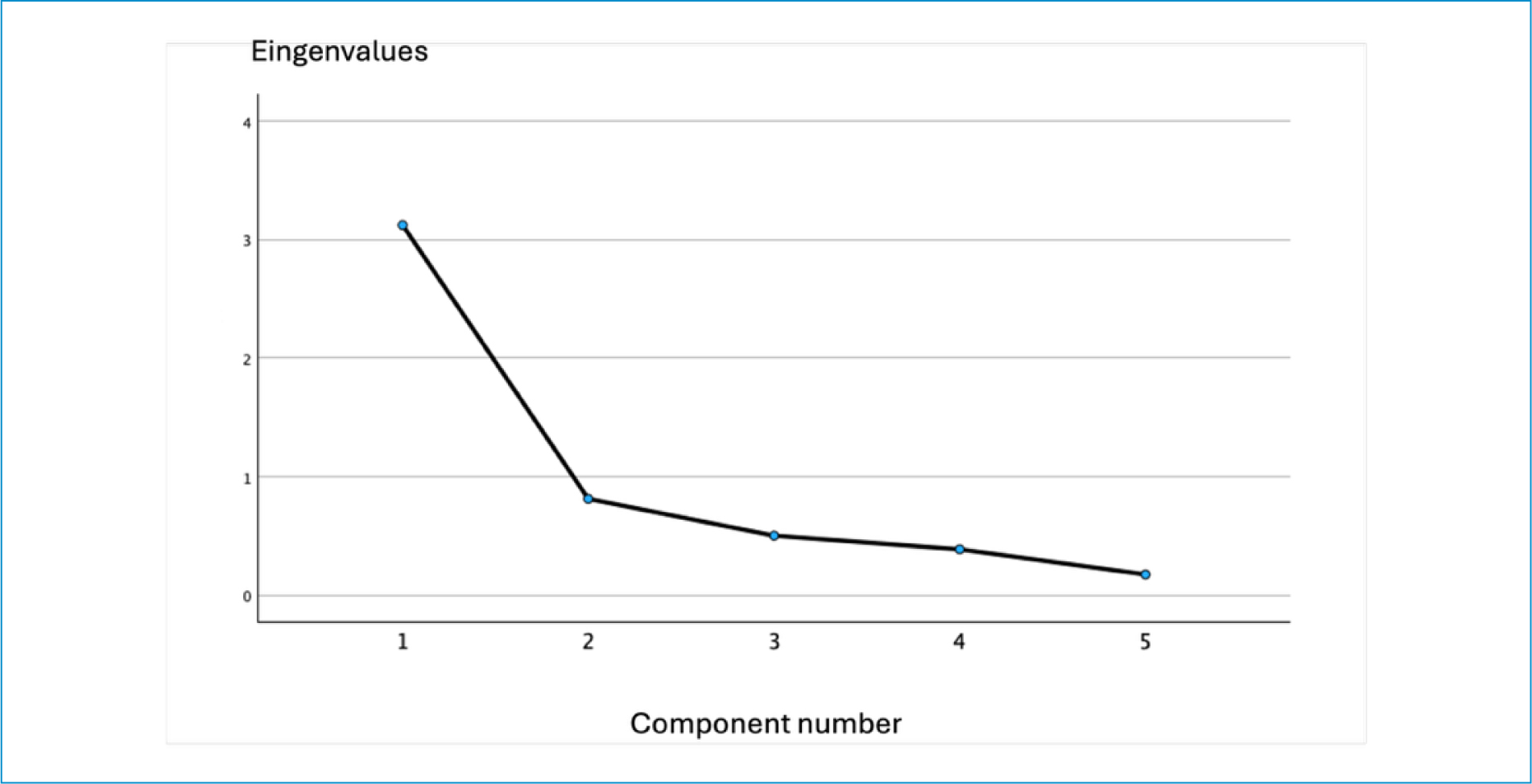
Figure 1. Scree plot showing a clear dominant first component, with a sharp drop in eigenvalues thereafter, supporting the unidimensional structure of the EMPATHIC-30.
The EFA revealed a unidimensional model, with one component explaining 62.5% of the variance. This suggests that parental satisfaction in PICUs, as measured by the EMPATHIC-30, can be interpreted as one overarching construct rather than multiple independent factors. All domains, except for the Organization dimension, contributed significantly to the explained variance, reinforcing the coherence of the model.
Discussion
This study translates and validates the EMPATHIC-30 questionnaire for the Portuguese context, focusing on assessing parental satisfaction in PICUs. In Portugal, there were no validated questionnaires for this context and purpose, so a secondary aim was for the Portuguese version of the EMPATHIC-30 to now be used universally by Portuguese PICUs. The neonatal period was excluded from this study, as there is a questionnaire adapted for neonates admitted to Neonatal Intensive Care Units, the EMPATHIC-N,23 which is currently in the final stages of validation for the Portuguese population.
The translation of the EMPATHIC-30 questionnaire into Portuguese was successfully achieved following the internationally recognized 10-step method.16 This method ensured that the translation process was rigorous and culturally adapted to the context of Portugal, maintaining the integrity of the original tool while making it comprehensible and relevant for our population.
The low response rate to the questionnaire during the study is most likely related to the simultaneous distribution of another questionnaire, which, although not validated, was already being used as a tool to assess parental satisfaction in this unit.
The validation process demonstrated generally satisfactory reliability and internal consistency. However, the Organization domain showed a low Cronbach’s α (0.461), indicating limited internal consistency within this dimension in our sample. This finding may reflect the small number of items included in this domain, cultural differences in the interpretation of organizational aspects of care, or limited variability due to the overall high satisfaction scores observed. However, overall, the findings align with the results of previous studies, reinforcing the reliability of the EMPATHIC-30 across different cultural contexts and healthcare settings.10–16 Parents rated all 30 items with a 4 or 5 in a five-point Likert scale. However, the analysis also revealed two items with a median Likert scale lower than the other items, concerning the accessibility of the department by phone (Q13) and related to regularly asking parents about their experiences during the hospital stay (Q18), with a median of 4.21 and 4.00, respectively. A possible explanation for the results regarding the accessibility of the department by phone may be that staff are not always able to answer calls, particularly during busy periods or when the team is understaffed. This item had the highest percentage of “Not applicable” (N/A) responses, at 23.3%. Such a result is unsurprising, as some parents may perceive the question as redundant, given that they can visit the PICU at any time. This trend is consistent with findings from other studies, including the Spanish version (35% N/A), the Australian version (33.8% N/A) and the Brazilian version (41.8% N/A).12,13,15 The Italian study also reported lower mean scores for the item regularly asking parents about their experiences during the hospital stay.24 These results suggest that, despite the overall positive feedback on the care provided, there are still opportunities for enhancing communication, especially regarding accessibility and the ongoing assessment of parental experiences during critical care situations.
Convergent validity was partially supported, with moderate correlations (> 0.4) observed in five relationships between domain scores and the overall satisfaction items, while weaker correlations were found in several other comparisons, particularly in the Organization domain. These findings suggest that some dimensions of parental satisfaction may be less strongly associated with global satisfaction ratings in the Portuguese context. The relatively weaker correlations cannot be fully explained by methodological factors, as the overall sample size was adequate and the questionnaire showed generally satisfactory psychometric performance. Nevertheless, the adaptation of the original 6-point Likert scale to a 5-point scale may have reduced response variability and contributed to the lower correlation coefficients. A similar pattern of convergent validity was reported in the Chinese validation study, despite the use of the original 6-point scale, suggesting that cultural or contextual factors may also influence the relationship between specific domains and overall satisfaction measures.14
As for divergent validity, a significant association was observed between nationality and the Parental Participation domain, with Portuguese families reporting slightly higher scores. Given the small number of non-Portuguese respondents, this finding should be interpreted with caution. Significant differences were also found between the Organization domain and the type of admissions (elective vs. acute and surgical vs. medical), with effective and surgical admissions tending to show lower scores in this domain. Parents of children admitted for surgical conditions reported lower scores in the Organization domain than those admitted for medical conditions.
The EFA revealed a unidimensional structure, consistent with the findings of the German study.10 This suggests that the EMPATHIC-30 measures one overarching construct of parental satisfaction, rather than multiple independent factors. Rather than assessing distinct aspects separately (e.g., emotional support, organization and communication), the results indicate that one underlying factor influences all these dimensions collectively. The fact that the first component explains 62.5% of the variance suggests that this primary factor accounts for most of the differences in parental satisfaction scores. This finding may be explained by the high intercorrelation between domains, suggesting that parents tend to perceive the quality of care as a global construct rather than as distinct components. Methodological factors may also have contributed to this result, including the relatively limited sample size, the use of a five-point Likert scale instead of the original six-point scale, and the overall high satisfaction scores observed, which may have reduced response variability and limited factor differentiation.
From a practical perspective, this implies that most of the variation in how parents perceive their experience in the PICU can be attributed to an overarching aspect of care – possibly the overall quality of care or the Family-Centered Care (FCC) approach. Since the EFA supports a unidimensional structure, the EMPATHIC-30 likely provides a comprehensive measure of parental satisfaction, driven by a dominant underlying component. This reinforces its utility as an assessment tool for evaluating overall care quality, while also highlighting that targeted improvements in this key factor could lead to significant enhancements in parental satisfaction.
Notably, all domains – except for the Organization dimension – showed greater satisfactory psychometric performance when considered individually. This finding suggests that, while the EMPATHIC-30 functions effectively as a holistic measure, its individual domains may still offer valuable insights into specific aspects of care, potentially guiding more precise quality improvement initiatives in PICUs.
There are several study limitations to address. First, our study was conducted in only one hospital setting, limiting the generalizability of the original version of the EMPATHIC-30 in other Portuguese NICUs or Portuguese parents across the world. The sample size could have been larger, particularly to strengthen the conclusions drawn from the exploratory factor analysis. The response rate of 48.6% is comparable to that reported in similar studies conducted in PICU settings,25 where response rates are often impacted by the stressful context and emotional burden experienced by parents. Additionally, the simultaneous use of other questionnaires in the unit may have contributed to this rate.
A modification of the original six-point Likert scale to a five-point scale was introduced during the cultural adaptation process, aiming to improve clarity and usability for the target population. While this change may limit direct comparability with other international versions of the EMPATHIC-30, it reflects common practice in Portuguese questionnaires and did not appear to compromise the internal consistency or overall psychometric performance of the instrument in our sample.
The final version resulting from the translation and validation of the EMPATHIC-30 was made available to the Portuguese Society of Pediatric Intensive Care for nationwide distribution.
Conclusion
The Portuguese version of the EMPATHIC-30 demonstrated generally satisfactory psychometric properties, particularly regarding the full-scale score, supporting its potential use as a measure of parental satisfaction in Portuguese PICUs. However, the low internal consistency of the Organization domain (Cronbach’s α = 0.461) and the modification of the original six-point Likert scale to a five-point scale warrant caution when interpreting the results and comparing them with international studies. The questionnaire proved applicable in a clinical context, effectively capturing key aspects of parental experiences during their child’s hospitalization.
These findings suggest that the EMPATHIC-30 has potential for use as a quality assessment tool in Portuguese PICUs. However, as this study was conducted in a single institutional setting, further multicenter studies are needed to confirm its reliability, factorial structure, validity, and generalizability. Future application of this instrument across multiple PICUs may contribute to identifying areas for improvement and supporting the implementation of family-centered care practices.
Awards and previous presentations
This work was presented as an oral communication at the 24th Congresso Nacional de Pediatria in October 2024. It received the award for best work in the field of Quality and Safety.
Author contributions
All authors contributed significantly to the development of the work.
Acknowledgments
On behalf of the team, we would like to thank all the families who participated in this study.
Funding
None.
Conflicts of interest
None.
Ethical considerations
Protection of human subjects and animals. The authors declare that no experiments on humans or animals were performed for this research.
Confidentiality, informed consent and ethical approval. The study was approved by the Ethics Committee of ULS Coimbra. Written informed consent was obtained from all participating parents or legal guardians. Questionnaires were collected anonymously, and confidentiality was maintained throughout the study.
Declaration on the use of artificial intelligence. The authors declare that no generative artificial intelligence was used in the writing or creation of the content of this manuscript.
