

Keypoints
What is known?
– Respiratory syncytial virus (RSV) is a major cause of respiratory tract infections requiring hospitalization in children worldwide.
– Nirsevimab has recently been approved as a preventive strategy against RSV infection, for all infants.
What is added?
– Madeira was the first region in Portugal to implement an immunization campaign with nirsevimab for all infants in their first RSV season in the 2023-24 RSV season.
– Our study estimated an effectiveness of 94.6% against RSV hospitalizations, with a 79.6% reduction in hospitalizations.
Introduction
Respiratory syncytial virus (RSV) is a leading cause of acute lower respiratory tract infection (LRTI) in infants worldwide. In 2019, it was estimated that there were 3.6 million RSV-associated LRTI hospital admissions globally in children under five years of age.1 RSV-related hospitalizations occur most frequently in infants under two years of age2 and the risk of hospitalization decreases with increasing age.3,4
In Portugal, the annual cost of RSV-related LRTI hospitalizations was estimated at 2.4 million euros between 2015 and 2018. The highest costs were incurred by children under two years old (96%) and by previously healthy children (87.6%).2 The Madeira Archipelago, an autonomous region of Portugal situated in the North Atlantic Ocean, has approximately 256,000 inhabitants and recorded 1747 births in 2023.5 The Portuguese Network for RSV Surveillance (VigiRSV) recorded 782 cases of acute respiratory infections in children in Madeira in the 2022-23 RSV season, 65.2% of which were confirmed to be RSV-related by real-time reverse transcription-polymerase chain reaction (RT-PCR).6
Nirsevimab (Beyfortus®, AstraZeneca/Sanofi Pasteur) was approved by the European Medicines Agency in October 2022.7 Nirsevimab is a recombinant human IgG1 kappa long-acting monoclonal antibody that inhibits RSV activity by blocking viral entry into host cells8 and has been proven effective and safe in preventing RSV infections in infants during their first epidemic season with a single dose injection.9–12
In October 2023, Madeira became the first region nationwide to recommend the universal use of nirsevimab as a prophylactic measure against RSV, free of charge.13 The immunization campaign began on November 1st, 2023, and ended on March 31st, 2024. Those eligible for its administration included all infants in their first RSV season residing in Madeira providing protection levels for up to 150 days.10–12,14,15, The campaign was aimed to immunize two groups: a seasonal group (infants born during the campaign) and a catch-up group (infants born from April 1st to October 31st, 2023). Additionally, infants with selected risk factors for severe infection were immunized.
Infants in the seasonal group were offered a dose of nirsevimab in the maternity ward within the first days of life. Infants in the catch-up group were immunized in the primary care setting at a scheduled appointment. The administration was intramuscular, and the dose varied according to body weight (50 mg if the infant’s body weight was below 5 kg, and 100 mg if it was above or equal to 5 kg).13
The present study aimed to assess the effectiveness of nirsevimab in preventing hospitalizations for RSV-related LRTI in the 2023-24 season.
Methods
Study design and participants
A population-based, longitudinal, observational study was conducted. Out of all the infants born between April 1st, 2023, and March 31st, 2024, infants who died before the campaign began, who were not residing in Madeira, or whose pregnant mother was immunized with Abrysvo® were excluded (Fig. 1). All infants who were eligible for immunization with nirsevimab in the 2023-24 RSV season were included.
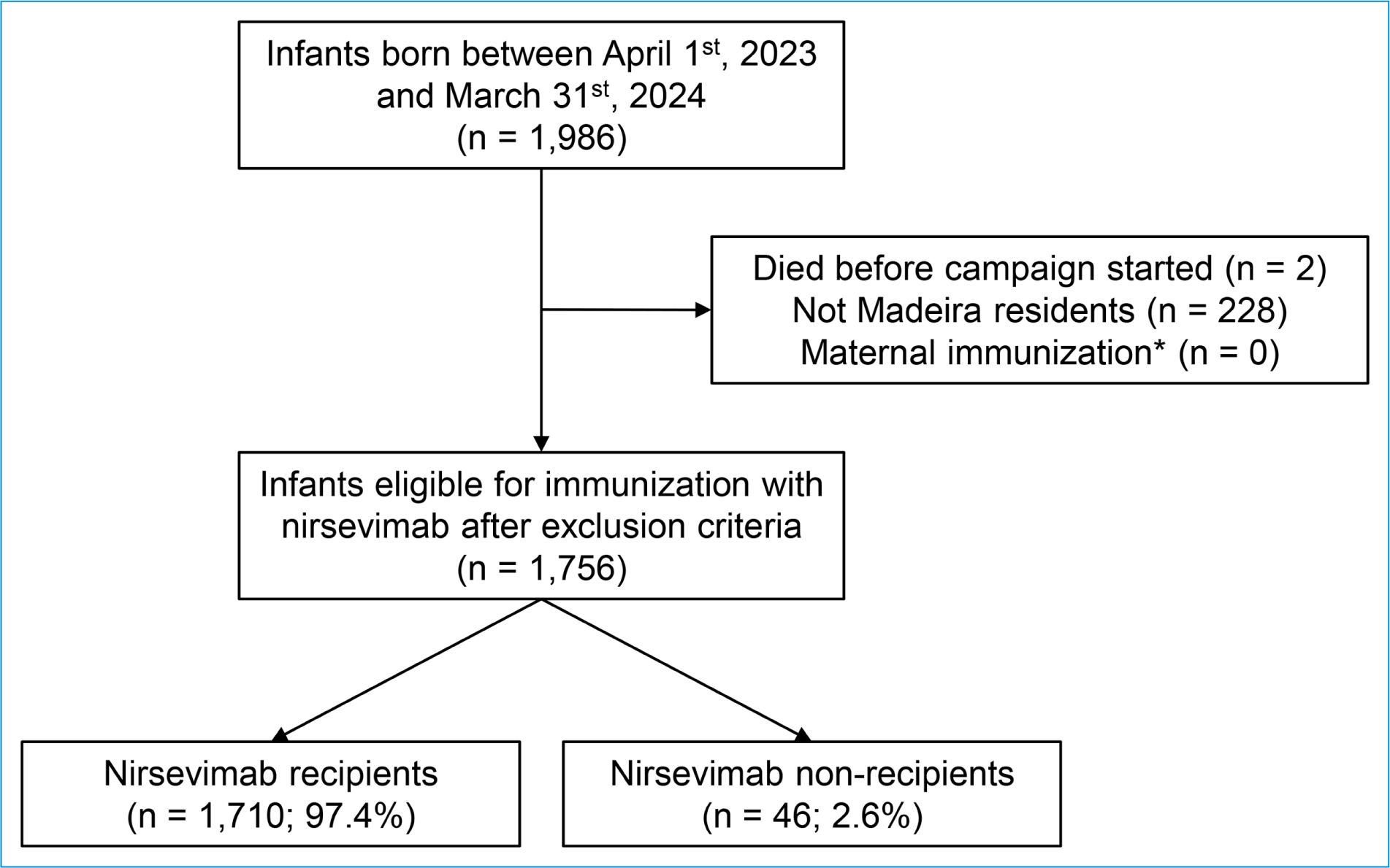
Figure 1. Flowchart of infants eligible for immunization with nirsevimab. *Maternal immunization with Abrysvo®
The infants were divided into the same groups as those defined during the immunization campaign, according to date of birth: a seasonal group (infants born during the campaign) and a catch-up group (infants born between April 1st and October 31st, 2023).
In both groups, infants were considered nirsevimab non-recipients if there was parental refusal; if they presented respiratory symptoms compatible with RSV infection shortly before or after the scheduled administration; or if nirsevimab was administered after hospitalization for RSV-related LRTI. Any ambiguous cases were reviewed on a case-by-case basis.
The follow-up period began on the immunization date for immunized infants and on November 1st, 2023, for non-immunized infants in the catch-up group. For non-immunized infants in the seasonal group, the follow-up period began on the date of birth. For nirsevimab recipients, the follow-up lasted for 150 days from the date of immunization, outcome (hospitalization) or death, whichever occurred first. For nirsevimab non-recipients, the follow-up lasted until the occurrence of an outcome (hospitalization), death or the end of the campaign on 31 March 2024, whichever occurred first.
A case of hospitalization for RSV-related LRTI was defined as a child under two years of age with an LRTI who was admitted to the hospital and had a nasopharyngeal swab that tested positive for RSV by RT-PCR.
Severe RSV-related LRTI was defined as requiring respiratory support (supplemental oxygen therapy, high-flow nasal cannula [HFNC] oxygen therapy, non-invasive mechanical ventilation, and invasive mechanical ventilation) and/or admission to an intensive care unit (ICU).
All children hospitalized due to an acute respiratory illness during RSV season were routinely tested for RSV. Nasopharyngeal exudate samples were collected using sterile swabs with viral transport medium. These samples were analyzed in the hospital laboratory using RT-PCR.
Data collection
Data on RSV-related LRTI hospitalizations during the RSV seasons between 2017-18 and 2023-24 were collected from SEIS-RAM (the electronic health information system used in Madeira that includes centralized hospital and primary care clinical records for each patient). RSV seasons during the COVID-19 pandemic (2020-21, 2021-22) were excluded due to potential changes in RSV circulation.
Sociodemographic characteristics, immunization status, laboratory test results and clinical records were systematically collected through this information system. All data were retrospectively gathered after the follow-up period ended.
Statistical analysis
To assess statistical differences in demographic characteristics between immunized and non-immunized infants, as well as statistical differences in clinical outcomes between 2023-24 RSV season and previous seasons (2017-18, 2018-19, 2019-20, 2022-23), we used a Student’s t-test or a Mann-Whitney test for continuous variables, and a Chi-squared test for categorical variables. The clinical endpoints evaluated were RSV-related LRTI hospitalization, severe RSV-related LRTI requiring respiratory support (supplemental oxygen therapy, HFNC oxygen therapy, non-invasive ventilation, invasive ventilation) and severe RSV-related LRTI requiring ICU admission.
To estimate the effectiveness of nirsevimab, we used a Cox proportional hazards regression model adjusted for age and sex. Calculated hazard ratios (HR) were presented with a 95% confidence interval (CI). The effectiveness of nirsevimab against RSV-related hospitalization was estimated as (1 – adjusted HR) x 100. A Kaplan-Meier survival analysis was conducted to estimate the mean time without hospitalization in the immunized and non-immunized groups. The number needed to immunize (NNI) to avoid one RSV-related LRTI hospitalization was calculated as the inverse of the absolute risk reduction.
To estimate the number of averted cases and relative reduction (%) compared to previous seasons, we calculated the ratio of infants hospitalized in their first RSV season to those in their second RSV season in previous seasons. Based on these ratios, we estimated the expected number of RSV-related hospitalizations among infants in their first RSV season if no immunoprophylaxis was given by using the observed number of infants who were hospitalized for RSV-related LRTI in their second RSV season in 2023-24. We then subtracted the observed number of RSV-related LRTI hospitalizations from the estimated number to determine the number of averted cases. The relative reduction was represented by the number of averted cases, divided by the expected number of cases and expressed as a percentage.
Analyses were performed using SPSS software (version 25.0, SPSS Inc.). A p value of less than 0.05 was considered statistically significant.
Results
Immunization campaign for the 2023-24 RSV season
Between April 1st, 2023, and March 31st, 2024, 1986 infants were born, of whom 230 were excluded. Two newborns were admitted to the ICU at birth and subsequently died for clinical reasons unrelated to RSV infection. Additionally, 228 infants were not residing in Madeira. Out of the 1756 infants eligible for nirsevimab administration, 745 (42.4%) were in the seasonal group and 1011 (57.6%) were in the catch-up group (Fig. 1).
The overall immunization rate was 97.4% (1710/1756 eligible), with similar coverage in the seasonal and catch-up groups (97.7% and 97.1%, respectively) (Fig. 2). Infants in the catch-up group were immunized at their primary care office, with priority given to younger infants. Within the first month of the immunization campaign, the immunization rate in the catch-up group was 92.3% (Fig. 2B).
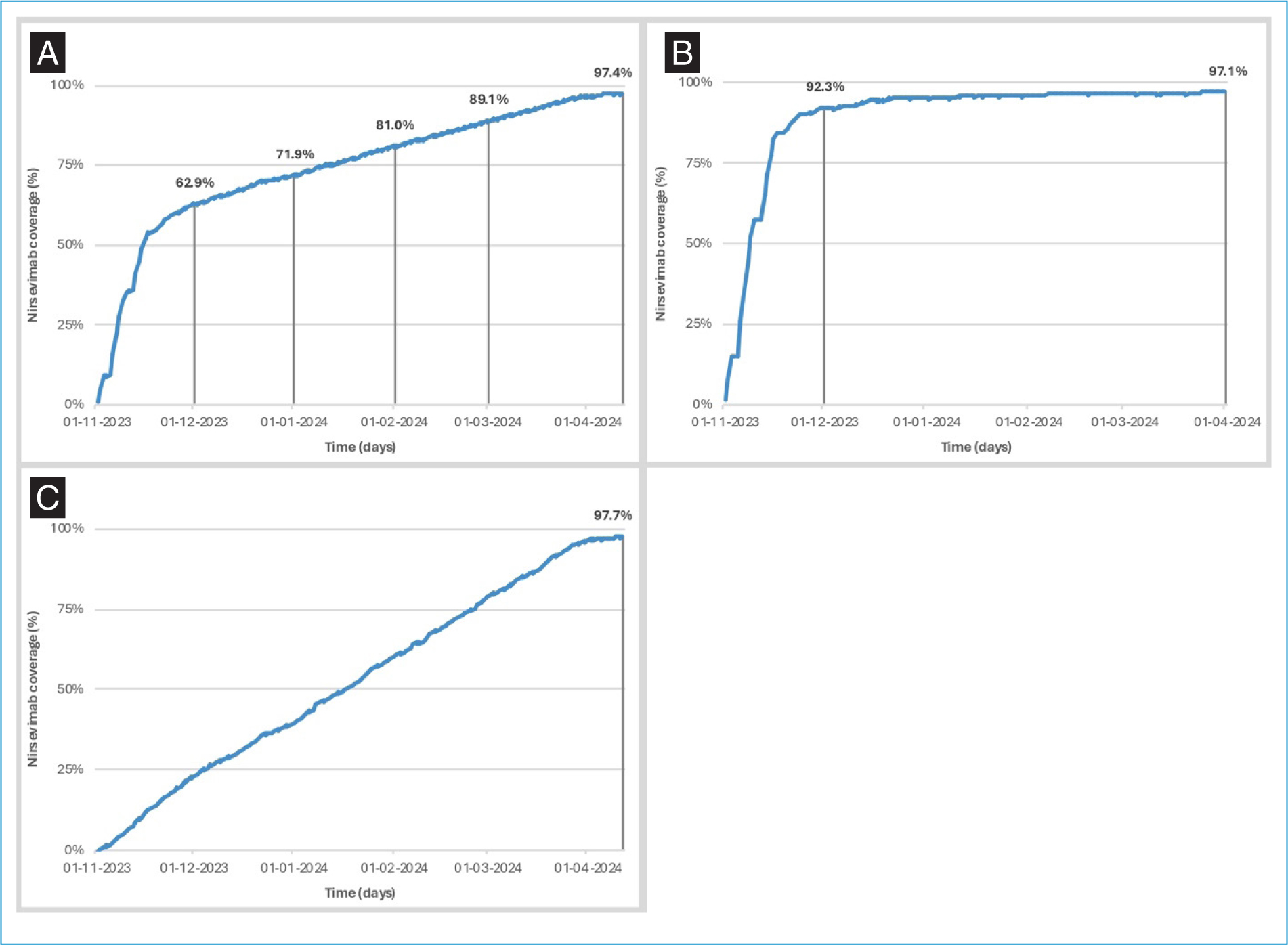
Figure 2. Nirsevimab immunization coverage (%) during the 2023-24 RSV season. A: all immunized eligible infants; B: immunized infants in the catch-up group; C: immunized infants in the seasonal group.
The median age at immunization was one month (IQR 0-4). The median gestational age at birth was 39 weeks (IQR 38-40). Out of the 1756 infants, 104 (6%) were born preterm, 102 (98.1%) of whom were immunized with nirsevimab.
Disparity in the sizes of the two groups was noted. The descriptive characteristics of infants eligible for immunization with nirsevimab are shown in table 1.
Table 1. Demographic and clinical characteristics of infants eligible for immunization with nirsevimab
| Characteristics | Total (n = 1756) | Immunization with nirsevimab | p | |
|---|---|---|---|---|
| Yes (n = 1710) | No (n = 46) | |||
| Immunization group, n (%) Catch-up Seasonal |
1011 (57.6) 745 (42.4) |
982 (57.4) 728 (42.6) |
29 (63.0) 17 (37.0) |
0.447* |
| Age, months Mean (SD) Median (IQR) |
1.9 (2.3) 1 (0-4) |
1.9 (2.3) 1 (0-4) |
2.4 (2.3) 2 (0-4) |
0.199† 0.133‡ |
| Sex, n (%) Female Male |
836 (47.6) 920 (52.4) |
819 (47.9) 891 (52.1) |
17 (37.0) 29 (63.0) |
0.143* |
| Gestational age at birth, weeks Mean (SD) Median (IQR) |
39 (1.8) 39 (38-40) |
39 (1.8) 39 (38-40) |
39.1 (1.3) 39 (39-40) |
0.673† 0.826‡ |
| Preterm birth, n (%) No, ≥ 37 weeks Yes, < 37 weeks |
1621 (94.0) 104 (6.0) |
1578 (93.9) 102 (6.1) |
43 (95.6) 2 (4.4) |
0.651* |
| Weight at birth, grams Mean (SD) Median (IQR) |
3208 (497) 3240 (2945-3505) |
3206 (497) 3240 (2945-3500) |
3299 (506) 3295 (2910-3595) |
0.222† 0.266‡ |
| Risk factors for severe infection, n (%) | 11 (0.6) | 11 (0.6) | 0 | – |
*Chi-squared test.
†Student’s t-test.
‡Mann-Whitney test.
Statistical significance for p < 0.05.
No adverse effects were reported through the pharmacovigilance system notification platform.
Effectiveness of nirsevimab in RSV-related LRTI hospitalizations in the 2023-24 season
During the follow-up period, 16 RSV-related LRTI hospitalizations were registered, eight of which were eligible for immunization with nirsevimab (Table 2). Of these, six were nirsevimab recipients and two were considered non-recipients: one infant due to parental refusal, and another who began showing respiratory symptoms two days prior to being immunized and was admitted to the hospital two days after the immunization.
Table 2. Nirsevimab effectiveness against hospitalizations for RSV-related LRTI in the 2023-24 RSV season
| Characteristics | Nirsevimab non-recipients | Nirsevimab recipients | Crude HR (95% CI)* | Effectiveness, % (95% CI)* | Adjusted HR (95% CI)† | Effectiveness, % (95% CI)† | ||
|---|---|---|---|---|---|---|---|---|
| Events | Total | Events | Total | |||||
| Hospitalization for RSV-related LRTI | 2 | 46 | 6 | 1710 | 0.072 (0.014-0.356) | 92.8 (64.4-98.6) | 0.054 (0.011-0.274) | 94.6 (72.6-98.9) |
| Severe RSV-related LRTI with supplemental oxygen therapy | 1 | 46 | 4 | 1710 | 0.096 (0.011-0.859) | 90.4 (14.1-98.9) | 0.083 (0.009-0.763) | 91.7 (23.7-99.1) |
| Severe RSV-related LRTI with ICU admission | 0 | 46 | 2 | 1710 | NA | NA | NA | NA |
| Severe RSV-related LRTI with HFNC oxygen therapy | 0 | 46 | 2 | 1710 | NA | NA | NA | NA |
| Severe RSV-related LRTI with non-invasive ventilation | 0 | 46 | 1 | 1710 | NA | NA | NA | NA |
| Severe RSV-related LRTI with invasive mechanical ventilation | 0 | 46 | 1 | 1710 | NA | NA | NA | NA |
*Not adjusted.
†Adjusted for age and sex.
CI: confidence interval; HFNC: high-flow nasal cannula; HR: hazard ratio; ICU: intensive care unit; LRTI: lower respiratory tract infection; NA: not applicable; RSV: respiratory syncytial virus.
The mean time without hospitalization was longer in the immunized group (149.6 days; 95% CI 149.3-149.9) than in the non-immunized group (145.1 days; 95% CI 137.0-153.1), with statistical significance (p < 0.001).
Among immunized infants who required hospitalization, the median number of days between immunization and the onset of respiratory symptoms was 37 days (IQR 19.8-52.0).
The estimated effectiveness of nirsevimab against hospitalization for RSV-related LRTI was 94.6% (95% CI 72.6-98.9), while it was 91.7% (95% CI 23.7-99.1) against that for severe RSV-related LRTI with supplemental oxygen therapy. Due to the limited number of hospitalizations, nirsevimab effectiveness against severe RSV-related LRTI requiring ICU admission, HFNC oxygen therapy, non-invasive ventilation and invasive mechanical ventilation could not be determined (Table 2).
Nirsevimab non-recipients were 13 times more likely to be hospitalized (OR 12.91 [95% CI 2.53-65.76]; p < 0.0001) than nirsevimab recipients. The NNI was 25.
RSV season 2023-24 and previous seasons (2017-18, 2018-19, 2019-20, 2022-23)
Comparing the 2023-24 season with previous seasons (2017-18, 2018-19, 2019-20, 2022-23), the median duration, in days, of supplemental oxygen therapy was significantly lower (p = 0.039). There were no significant differences in the other assessed outcomes (Table 3).
Table 3. Comparison between hospitalizations for RSV-related LRTI in RSV season 2023-24 and previous seasons (2017-18, 2018-19, 2019-20, 2022-23)
| Characteristics | Previous RSV seasons (n = 103) | RSV season 2023-24 (n = 16) | p |
|---|---|---|---|
| Hospitalization for RSV-related LRTI Duration, median (min-max), days |
5 (1-19) |
3.5 (1-13) |
0.072† |
| Severe RSV-related LRTI requiring respiratory support, n (%) Duration, median (min-max), days |
84 (81.6) 2 (0-8) |
10 (62.5) 1 (0-15) |
0.101* 0.068† |
| Supplemental oxygen therapy, n (%) Duration, median (min-max), days |
84 (81.6) 3 (0-8) |
10 (62.5) 1 (1-8) |
0.101* 0.039† |
| High-flow nasal cannula oxygen therapy, n (%) Duration, median (min-max), days |
3 (2.9) 2 (2-3) |
2 (12.5) 1 (1-1) |
0.133* 0.068† |
| Non-invasive ventilation, n (%) Duration, median (min-max), days |
3 (2.9) 2 (2-2) |
1 (6.3) 8 (8-8) |
0.443* 0.083† |
| Invasive ventilation, n (%) Duration, median (min-max), days |
0 (0.0) – |
1 (6.3) 5 (5-5) |
0.134* – |
| Severe RSV-related LRTI requiring ICU admission, n (%) | 10 (9.7) | 2 (12.5) | 0.664* |
*Chi-squared test.
†Mann-Whitney test. Statistical significance for p < 0.05.
RSV: respiratory syncytial virus; LRTI: lower respiratory tract infection; ICU: intensive care unit.
In the 2023-24 season, the two infants who required admission to the ICU had been immunized with nirsevimab. One was a 26-week premature infant who required supplemental oxygen therapy, HFNC oxygen therapy, non-invasive ventilation and invasive ventilation. The other infant was born at term and required 24 hours of supplemental oxygen therapy and 24 hours of HFNC oxygen therapy. It is worth noting that HFNC oxygen therapy is currently only available in the ICU at our institution.
Based on previous seasons (2017-18, 2018-19, 2019-20, 2022-23), the estimated median number of averted cases was 45 (IQR 15-83) and that of relative reduction in hospitalizations was 79.6% (IQR 62.6-90.9) (Table 4).
Table 4. Impact of nirsevimab in hospitalizations for RSV-related LRTI in RSV season 2023-24 based on previous seasons (2017-18, 2018-19, 2019-20, 2022-23)
| Variable | RSV season | Median (IQR) | |||
|---|---|---|---|---|---|
| 2017-18 | 2018-19 | 2019-20 | 2022-23 | ||
| RSV-related LRTI hospitalization ratio (1st:2nd season) | 10.0 | 15.5 | 3.3 | 1.8 | |
| Estimates for the 2023-24 season Expected number of hospitalizations (1st season)* Averted number of cases† Relative reduction, n (%) |
80 72 90.0 |
124 116 93.5 |
26 18 69.2 |
14 6 43.8 |
53 (23-91) 45 (15-83) 79.6 (62.9-90.9) |
*To estimate the expected number of RSV-related hospitalizations among infants in their first RSV season if no immunoprophylaxis was administered, we multiplied the number of infants who passed their second RSV season in 2023-24 (8 infants) by the ratio (1st:2nd season) in previous seasons.
†The averted number of cases was calculated by subtracting number of infants hospitalized for RSV-related LRTI who were passing their first RSV season in 2023-24 (8 infants) from the expected number of cases.
RSV: respiratory syncytial virus; LRTI: lower respiratory tract infection.
Discussion
Nirsevimab was 94.6% (95% CI 72.6-98.9) effective in preventing RSV-related LRTI hospitalizations, adjusted for age and sex. The median duration of supplemental oxygen therapy was significantly shorter in the 2023-24 RSV season than in previous seasons (p = .039). The NNI was 25. A median relative reduction of 79.6% (IQR 62.6-90.9) in hospitalizations was noted, with a median of 45 averted cases (IQR 15-83). No adverse effects have been reported by the publication date of this paper.
Randomized clinical trials such as MELODY10 and HARMONIE9 have reported efficacy rates of 62.1% and 83.2%, respectively, against RSV-related LRTI hospitalizations. Our analysis demonstrated that nirsevimab was 94.6% (95% CI 72.6-98.9) effective in preventing hospitalizations for RSV-related LRTI. This is consistent with the results of other real-world studies conducted in France (83%; 95% CI 73.4-89.2),16 in the USA (90%; 95% CI 75-96)17 and in several regions of Spain, namely in Navarre (88.7%; 95% CI 69.6-95.8),18 Catalonia (87.6%; 95% CI 82.1-91.4),19 Galicia (82%; 95% CI 65.6-90.2),20 and across Valencia, Murcia and Valladolid (84.4%; 95% CI 76. 8-90).21 In our study, the estimated effectiveness of nirsevimab against severe RSV-related LRTI requiring supplemental oxygen therapy was 91.7% (95% CI 23.7-99.1), similar to that reported in Galicia20 (86.9%; 95% CI 69.1-94.2).
Based on previous RSV seasons, the median number of averted cases was 45 (IQR 15-83), corresponding to a median relative reduction of hospitalizations of 79.6% (IQR 62.6-90.9), which is consistent with the 69% reduction in cases among infants under six months of age in Luxembourg from 2022 to 2023,22 the estimated 89.84% reduction (IQR 87.58-90.30) reported in Galicia,20 and 47.6% reduction in Navarre.18
The NNI is essential for determining the potential public health impact of an immunization program, depending on the observed effectiveness. According to Finelli et al.,23 who modelled the anticipated public health benefits of RSV immunization with an extended-life monoclonal antibody, and estimated that 37-280 infants would need to be immunized to prevent one RSV-associated hospitalization in the first year of life, assuming 70% efficacy. The authors acknowledge the possibility of underestimating incidence rates, which could lead to higher NNI values. Additionally, as efficacy increases, the NNI decreases. Therefore, given that the real-world effectiveness is estimated to be higher than the chosen mid-reference point of 70%, and acknowledging the potential overestimation of the NNI, we consider our NNI of 25 to be consistent with this model, making it a suitable strategy. Moreover, our NNI aligns with the results of other real-world studies conducted in Galicia (median 25; IQR 24-32)20 and Navarre (15.3).18
The nirsevimab immunization campaign was well received by our regional community, achieving an overall immunization rate of 97.4%, with similar rates in the seasonal and catch-up groups. This can be partly explained by the methodical immunization campaign, which provided comprehensive information and educational content for both the community and healthcare professionals. This campaign was promoted across diverse social media platforms, online, and in print. The immunization rate in the catch-up group in the campaign’s first month was 92.3%, in comparison to Catalonia (76.3%)19 and Murcia (90% in 39 days).24 Within this timeframe, this outstanding immunization rate is primarily the result of the well-coordinated and efficient logistics handled by the primary care centers. Furthermore, immunizing infants in maternity wards reduced the number of infants scheduled at primary care centers. This eliminated the need for additional immunization sites and reduced the likelihood of unadministered immunizations due to appointments being missed. The absence of reported adverse effects supports the safety of this immunoprophylaxis in this age group.9,10,12,14,18
This study has some limitations. Firstly, the limited number of events, likely resulting from the small analyzed population size, made it impossible to estimate the effectiveness of nirsevimab against various endpoints. Secondly, due to the implementation of VigiRSV during the 2021-22 RSV season, RT-PCR testing for RSV was only routinely conducted in all patients hospitalized for LRTI from that point onward. In previous seasons, RSV testing was performed at the discretion of individual clinicians, meaning the total number of cases during those seasons is presumably an underestimation of the actual number of RSV-related LRTI hospitalizations.
This study has several strengths, including the inclusion of only RT-PCR-confirmed RSV-positive cases, data sourced from an integrated electronic health information system encompassing both hospital and primary care clinical records, and the use of historical data from seasons prior to the COVID-19 pandemic. The latter allowed us to account for changes in RSV circulation following the pandemic, rather than relying solely on data from the 2022-23 RSV season for comparisons. Furthermore, as the first national study to assess the real-world outcomes of nirsevimab immunization in its inaugural season, our findings offer valuable insights for shaping prophylactic strategies against RSV infection and strengthening community adherence in the future.
Conclusion
Nirsevimab has proved to be highly effective in reducing hospitalizations for RSV-related LRTI in real-world settings. Madeira was a pioneer in recommending universal immunoprophylaxis with nirsevimab against RSV infection for all infants during their first RSV season in Portugal. Our study is the first nationwide one, and one of the few worldwide, to shed light on the effectiveness of nirsevimab beyond clinical trials. These results offer pivotal evidence to inform RSV immunization strategies and public health policies. Further studies are needed to assess the effectiveness of nirsevimab in other clinical settings, such as emergency departments and primary care settings, and to perform a cost-effectiveness analysis.
Acknowledgements
The authors would like to thank Dr. L. Aveiro for her collaboration and support throughout this study, and all those who contributed to data collection.
Author contributions
A. Afonso, F. Pestana: conceptualization, data curation, formal analysis, investigation, methodology, validation, visualization, writing – original draft, writing – review & editing. M. Rodrigues: data curation, formal analysis, methodology, software, visualization, writing – review & editing. A. Andrade, B. Camacho: conceptualization, methodology, supervision, writing – review & editing. J. Alves: conceptualization, data curation, methodology, resources, writing – review & editing. T. Jacinto, E. Costa, B.R. Gouveia: conceptualization, writing – review & editing. C. Freitas: conceptualization, methodology, project administration, supervision, writing – review & editing. All authors approved the final version to be published.
Awards and previous presentations
Preliminary data from this study were presented as an oral presentation at the “24º Congresso Nacional de Pediatria”, where it was awarded the “Grande Prémio SPP”.
Funding
None.
Conflicts of interest
None.
Ethical considerations
Protection of humans and animals. The authors declare that no experiments involving humans or animals were conducted for this research.
Confidentiality, informed consent, and ethical approval. The authors have obtained approval from the Ethics Committee for the analysis of routinely obtained and anonymized clinical data, so informed consent was not necessary. Relevant guidelines were followed.
Declaration on the use of artificial intelligence. The authors declare that no generative artificial intelligence was used in the writing of this manuscript.
