

Keypoints
What is known
– Limited joint mobility associated with diabetes mellitus, involving restricted joint movement, a rare finding amongst pediatric patients.
– Diabetic cheiroarthropathy is a long-term complication of diabetes, causing physical and emotional disability.
– Diabetic cheiroarthropathy is associated with poor metabolic control and microvascular complications.
What is added
– Raises awareness of musculoskeletal complications in pediatric diabetes and the need for therapy referrals.
– Highlights the overlooked impact of diabetic cheiroarthropathy on quality of life and fine motor skills.
– Provides a rare adolescent case linking diabetic cheiroarthropathy to multiple microvascular complications.
Diabetic cheiroarthropathy (DC), also known as limited joint mobility, restricts movement of the small joints of the hands and often coexists with other diabetes-related complications.1 It occurs in both type 1 and type 2 diabetes, with the risk increasing with glycated hemoglobin levels and disease duration.2 Genetic predisposition and the cross-linking of advanced glycation end products to collagen in the skin, tendons, and ligaments also contribute.1,2
Clinical manifestations include reduced pain sensitivity, reduced grip strength, and a gradual decline in fine motor skills. Contractures of the proximal interphalangeal and metacarpophalangeal joints, with thickened, waxy skin, are common. The diagnosis is clinical.2–4
A 16-year-old female with type 1 diabetes diagnosed in the first year of life, treated with once-daily insulin glargine and twice-daily insulin aspart (HbA1c 7.7%), was evacuated from Cabo Verde to a tertiary hospital in Portugal due to retinal detachment secondary to proliferative diabetic retinopathy. She also had moderate distal symmetrical peripheral polyneuropathy and nephropathy.
Examination of the hands revealed fixed flexion deformities at all interphalangeal joints (Fig. 1). The palms were thickened and indurated, with a positive prayer sign (Fig. 2).3, Tests for carpal tunnel syndrome were negative, and grip strength was impaired. She was managed with optimized glycemic control and pain management to improve function and prevent progression.
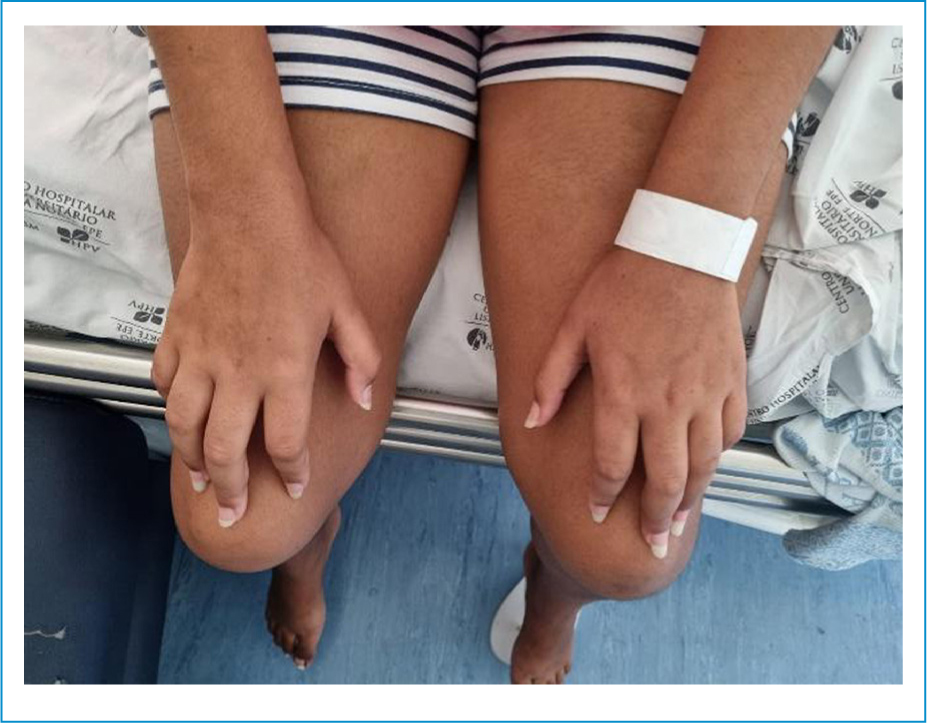
Figure 1. Hands resting on the knees, showing fixed flexion contractures of the proximal and distal interphalangeal joints, with inability to fully extend the fingers.
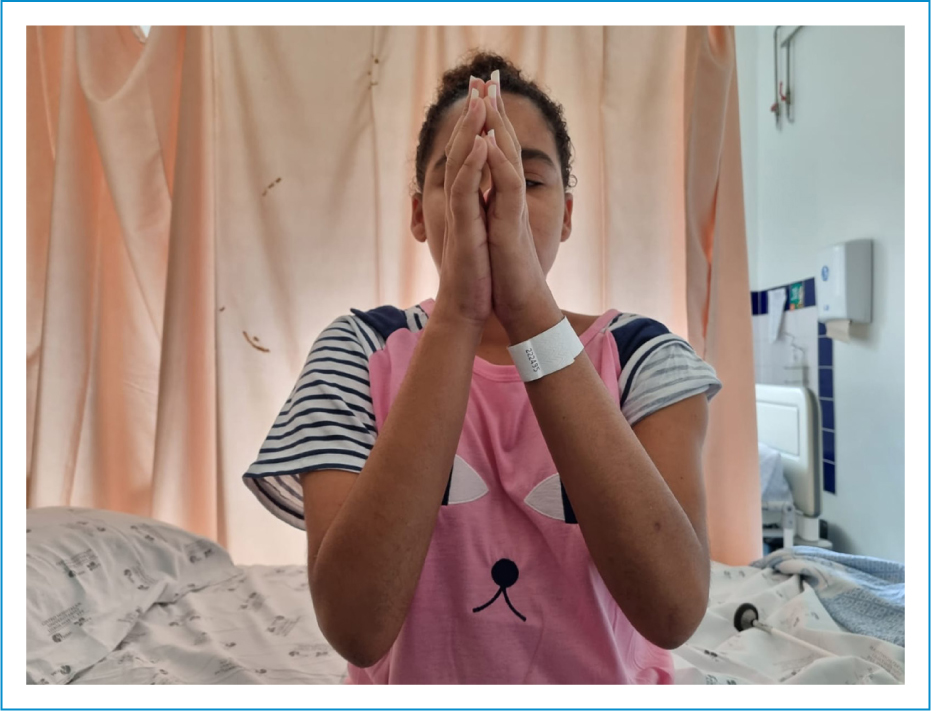
Figure 2. Positive prayer sign: with the hands pressed together, the patient is unable to fully approximate the palmar surfaces of the fingers and palms.
DC remains a frequently neglected late complication of diabetes,2 impairing fine motor skills and contributing to psychological and emotional disturbance. This case underscores the importance of early recognition and intervention to improve long-term prognosis. In settings such as Cabo Verde, a consistent insulin supply, therapeutic education, and access to advanced technologies are essential.
Author contributions
M. Soares: conceptualization, data curation, investigation, and writing. R. Inácio: review and editing. A.R. Henriques: conceptualization, review, and editing. J. Coelho: review and editing. M. Bernardo: conceptualization, review, and editing.
Funding
None.
Conflicts of interest
None.
Ethical considerations
Protection of humans and animals. The authors declare that no experiments involving humans or animals were conducted for this research.
Confidentiality, informed consent, and ethical approval. The authors have followed their institution’s confidentiality protocols, obtained informed consent from patients, and received approval from the Ethics Committee. The SAGER guidelines were followed according to the nature of the study.
Declaration on the use of artificial intelligence. The authors declare that no generative artificial intelligence was used in the writing of this manuscript.
