Dear Editor,
In Portugal, the smoking prevalence among adults is approximately 19%, and 37% of children are exposed to environmental smoke from at least one smoking household member.1,2 Although this study is mainly focused on tobacco’s short-term effects, children with smoking carers are three times more likely to become smokers (25 vs. 8%).3
A paediatric pulmonology ward (PPW) provides a unique setting for smoking cessation programs, as caregivers are often more receptive to health advice when a child’s illness may be directly affected by smoking behavior. Brief smoking cessation interventions involve structured, supportive conversations designed to motivate behavior change. The “5A’s” model – Ask, Advise, Assess, Assist, and Arrange – is a widely recommended framework for such interventions.4
The TabacoStop study aimed to develop and evaluate a brief smoking cessation intervention for caregivers of children admitted to the PPW at Hospital de Santa Maria (Lisbon, Portugal). This longitudinal, interventional study included smoking cohabitants of paediatric inpatients over a two-year period (April 2022 – April 2024). Inclusion criteria included smoking at least one conventional or electronic cigarette daily and spending a minimum of six hours per day with the child at least half of the week. A brief intervention protocol based on the 5A’s model was implemented. The study team provided training to ward residents, displayed educational materials and gave handouts to raise awareness. After giving informed consent, participants completed a baseline questionnaire. During the child’s hospital stay, participants received a brief smoking cessation intervention. Three months later, follow-up telephone interviews were conducted to reassess smoking habits. Approval was granted by the pediatrics department director and participant anonymity was maintained.
Fifty-three participants provided complete data, with a median age of 36 years (range 21-68). Women represented 55% (n = 29). Among their hospitalized children, 40% (n = 21) had chronic respiratory diseases, mainly asthma or recurrent wheezing. Regarding tobacco use, 77% (n = 41) smoked conventional cigarettes, 19% (n = 10) used heated tobacco, and 4% (n = 2) used electronic nicotine delivery systems (ENDS). After three months, 49% (n = 26) reported reduced consumption and 23% (n = 12) achieved complete cessation (Fig. 1). Average daily cigarette consumption decreased from 11.4 to 6.7. Over half of the respondents (55%) noted an improvement in their children’s health following a reduction or cessation of smoking.
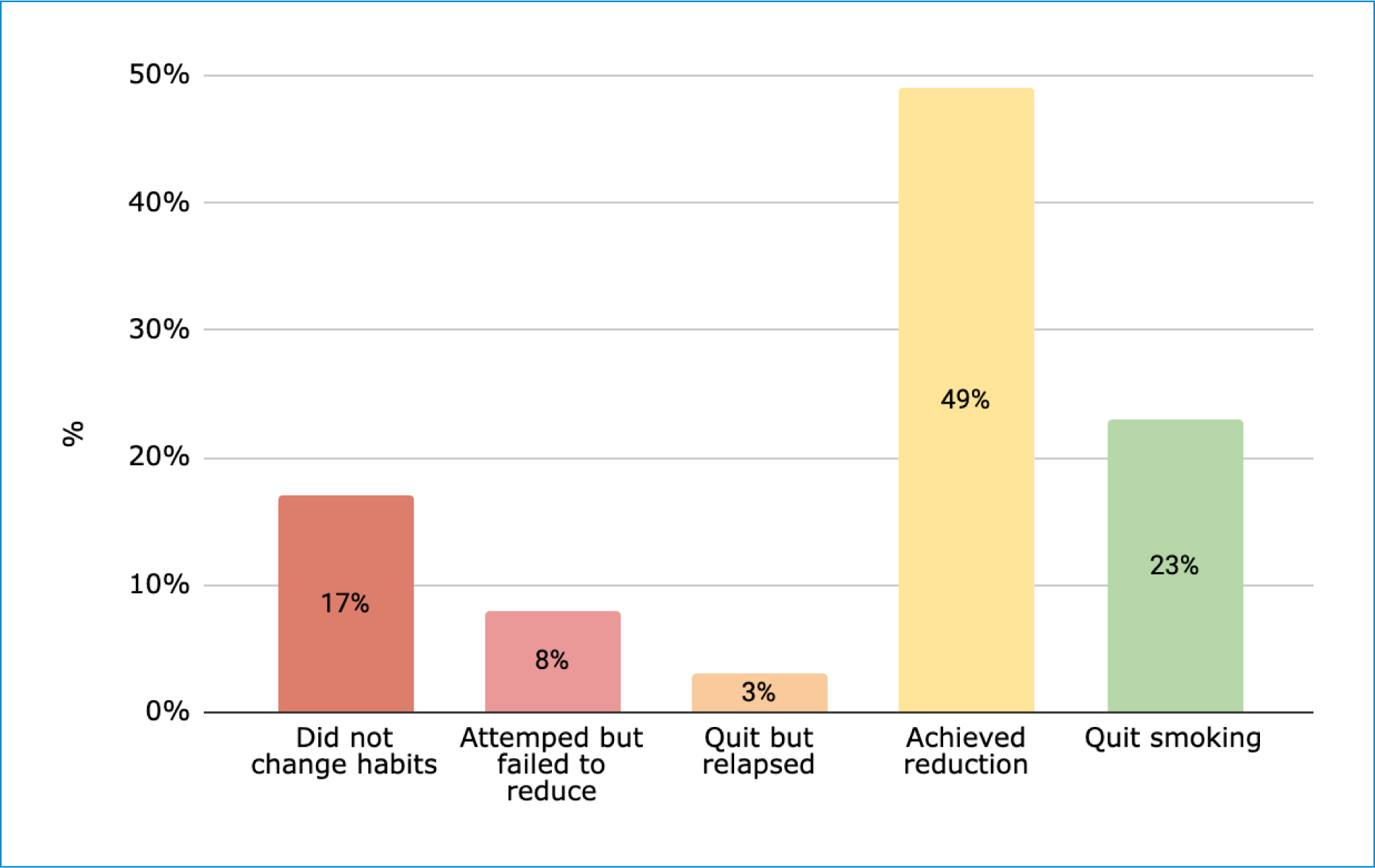
Figure 1. The efficacy of the brief intervention in the smoking cessation program was assessed through a telephonic follow-up after a three-month period.
Caregivers of children with chronic respiratory conditions were more motivated to quit (95% vs. 75%), yet they achieved similar cessation rates (23% vs. 22%). Men were less likely to attempt quitting (79% vs. 86%), yet they had higher cessation success rates (29% vs. 17%). Younger participants were more successful: 20-29-year-olds achieved a 40% (n = 2) quit rate, 30-39-year-olds achieved a 20% (n = 7), and those over 40 only a 6%. Users of heated tobacco or ENDS were more likely to attempt quitting (92%, n = 7, vs. 75%, n = 31) but remarkably none achieved abstinence compared to 29% of traditional cigarette smokers.
The observed 23% quit rate at three months is favorable compared to the usually reported 10-15% in brief-intervention studies with adults.5,6 Younger age correlated with higher success, consistent with previous research. The notable prevalence of heated tobacco and ENDS use, coupled with low cessation, suggests an emerging challenge in tobacco control. These may be perceived as less harmful or more socially acceptable despite their proven risks.7 The study’s limitations include its single-center design, small sample size, short-term follow-up and reliance on self-reported data rather than objective verification methods, such as exhaled carbon monoxide monitoring.
Nevertheless, this study demonstrates that pediatric inpatient settings provide a valuable opportunity for smoking cessation interventions. The brief 5A’s-based approach achieved promising reductions in tobacco use, surpassing the results typically observed in primary care settings. Implementing similar programs more broadly could benefit both caregivers and children by reducing their exposure to environmental tobacco and improving respiratory health outcomes.
Author contributions
A. Silva: conceptualization; data curation; formal analysis; investigation; methodology; project administration; resources; supervision; validation; writing-original draft; writing-review & editing. F. Abrantes: conceptualization; data curation; methodology; writing-review & editing. M. Fonseca: conceptualization; data curation; methodology; writing-review & editing. C. Constant: conceptualization; methodology; supervision; validation; writing-review & editing. T. Bandeira: conceptualization; methodology; supervision; validation; writing-review & editing.
Funding
None.
Conflicts of interest
None.
Ethical considerations
Protection of human subjects and animals. The authors declare that no experiments on humans or animals were performed for this research.
Confidentiality, informed consent, and ethical approval. This study does not involve personal patient data, medical records, or biological samples, and does not require ethical approval. SAGER guidelines do not apply.
Declaration on the use of artificial intelligence. The authors declare that no generative artificial intelligence was used in the writing or creation of the content of this manuscript.
